Seongsu or Yeonnam-dong? Choose Your First Seoul Afternoon by Energy Level
Both are excellent café-and-neighbourhood districts, but they solve different first-afternoon needs: Seongsu for trend discovery and pop-ups; Yeonnam for a softer park-and-alley stroll near Hongdae.
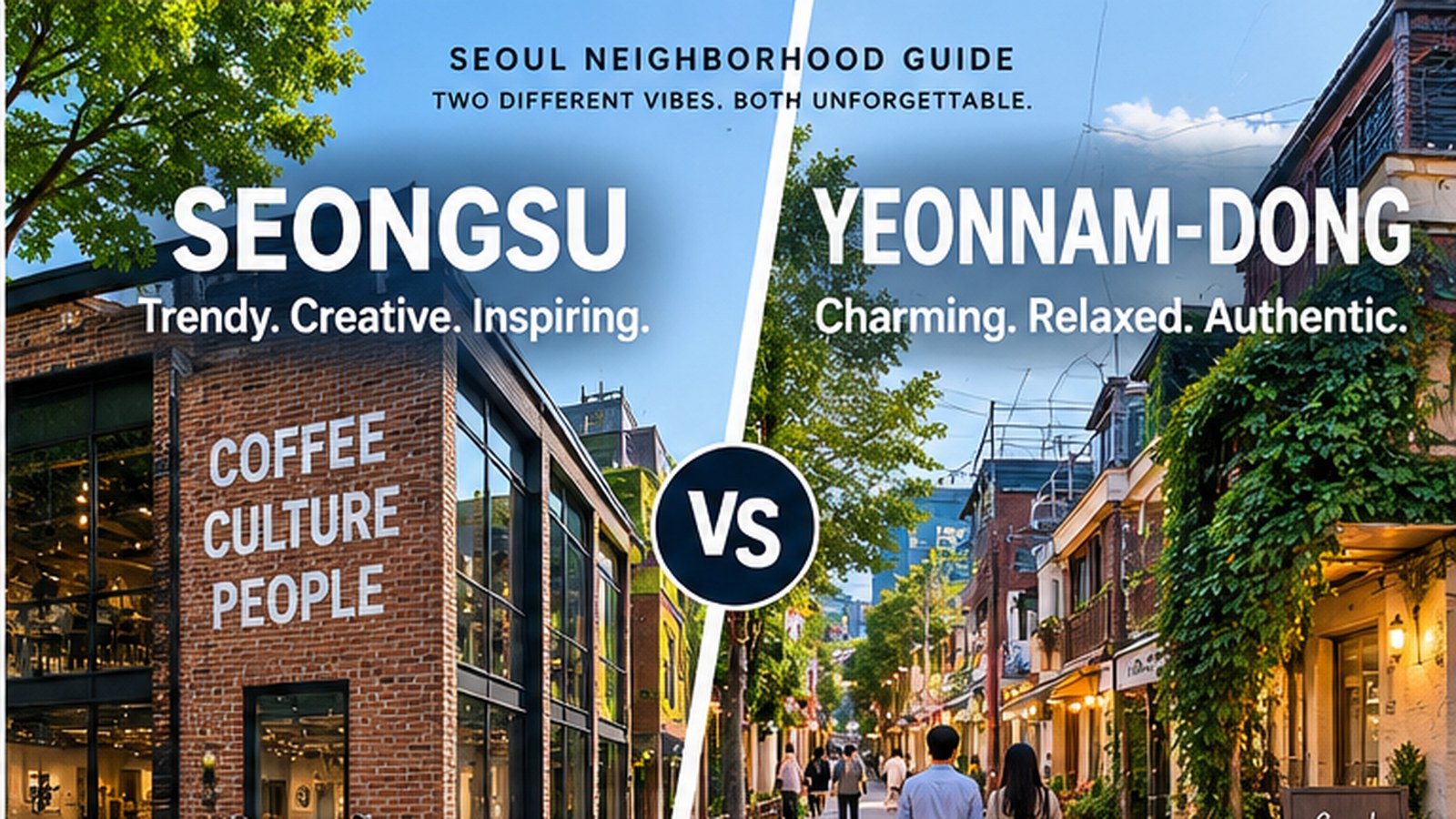
Seongsu for trend discovery; Yeonnam for a softer arrival
Both have cafés and contemporary Seoul character. Choose Seongsu when pop-ups and new brands energise you; choose Yeonnam when a park-and-alley stroll near Hongdae better matches first-day fatigue.
On a first afternoon in Seoul, the best neighbourhood is not necessarily the one with the most famous stores. You may have slept badly on the flight, your hotel room may not be ready, and you probably do not yet know how much energy you have. That is why Seongsu versus Yeonnam-dong is a useful comparison: both offer cafés, shops and contemporary Seoul, but they ask very different things from you.
Seongsu is the “I want to see what Seoul is doing now” choice. Yeonnam-dong is the “I want to arrive gently and still feel Seoul around me” choice.
The quick decision
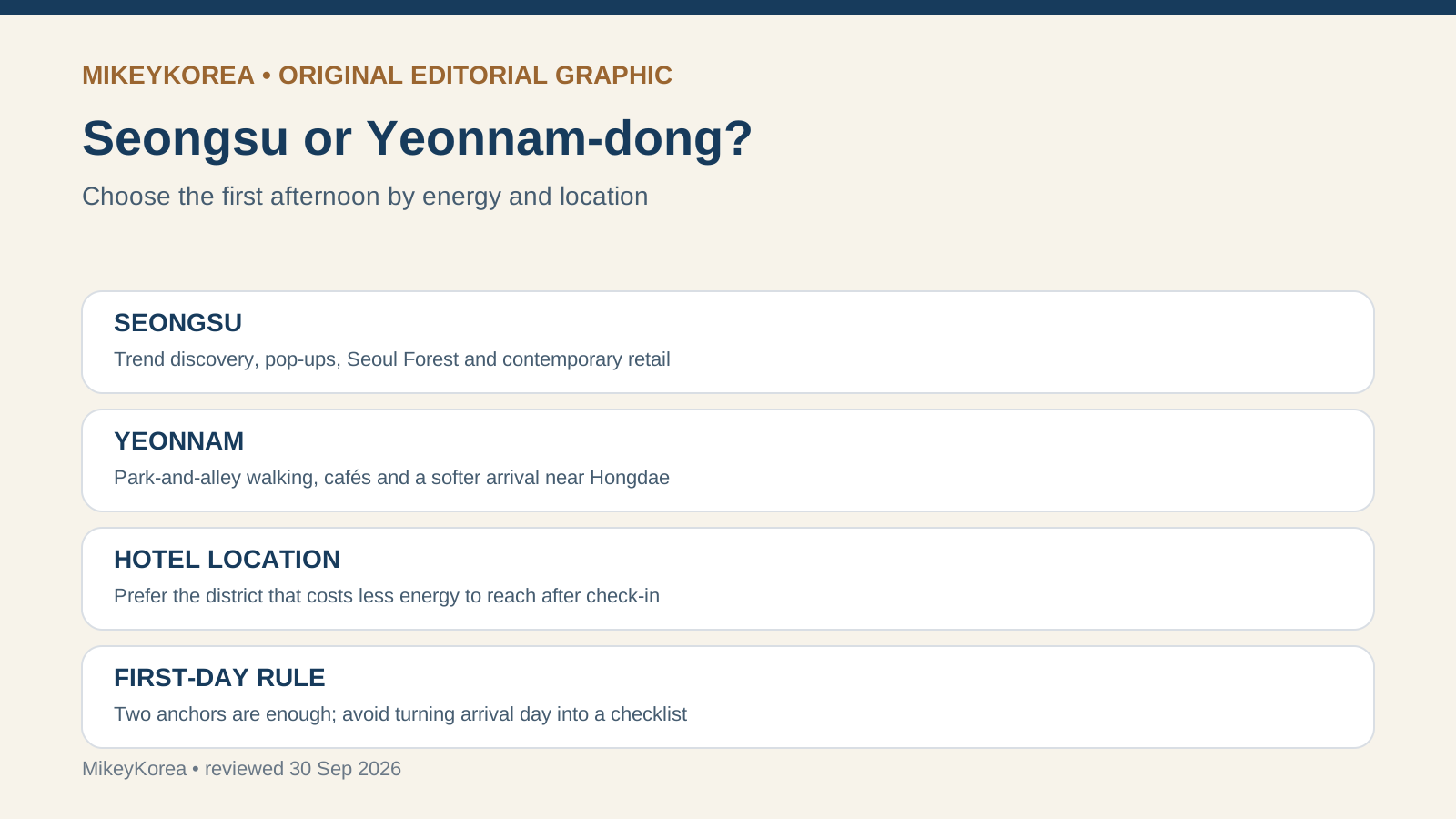
| If you want… | Choose first | Why |
|---|---|---|
| Pop-ups, new brands, contemporary retail | Seongsu | Former industrial spaces now hold cafés, showrooms, concept stores and rotating pop-ups |
| A low-pressure walk after a flight | Yeonnam-dong | Gyeongui Line Forest Park gives the afternoon a simple linear spine with cafés and alleys beside it |
| Seoul Forest + café + shopping | Seongsu | Easy to combine a park with a trend district |
| Hongdae hotel / AREX arrival | Yeonnam-dong | It sits next to Hongik University Station and avoids another cross-city journey |
| Strong interest in Korean fashion/beauty trends | Seongsu | Showrooms, flagships and pop-ups are central to the experience |
| Conversation, café, slow dinner | Yeonnam-dong | Neighbourhood scale and side alleys suit a softer pace |
Seongsu: stimulation in a former industrial district
VISITKOREA describes Seongsu as a former industrial area of printing, shoes and leather businesses that evolved into a district of galleries, select shops, restaurants and cafés. Current KTO shopping guidance also highlights converted factories, local designer brands, lifestyle stores, beauty spaces and pop-ups.
That history is visible in the experience: brick, concrete, warehouses, old workshops and modern retail sit together. It feels deliberately unfinished in places—and that is part of the appeal.
Why Seongsu can be tiring on the first day
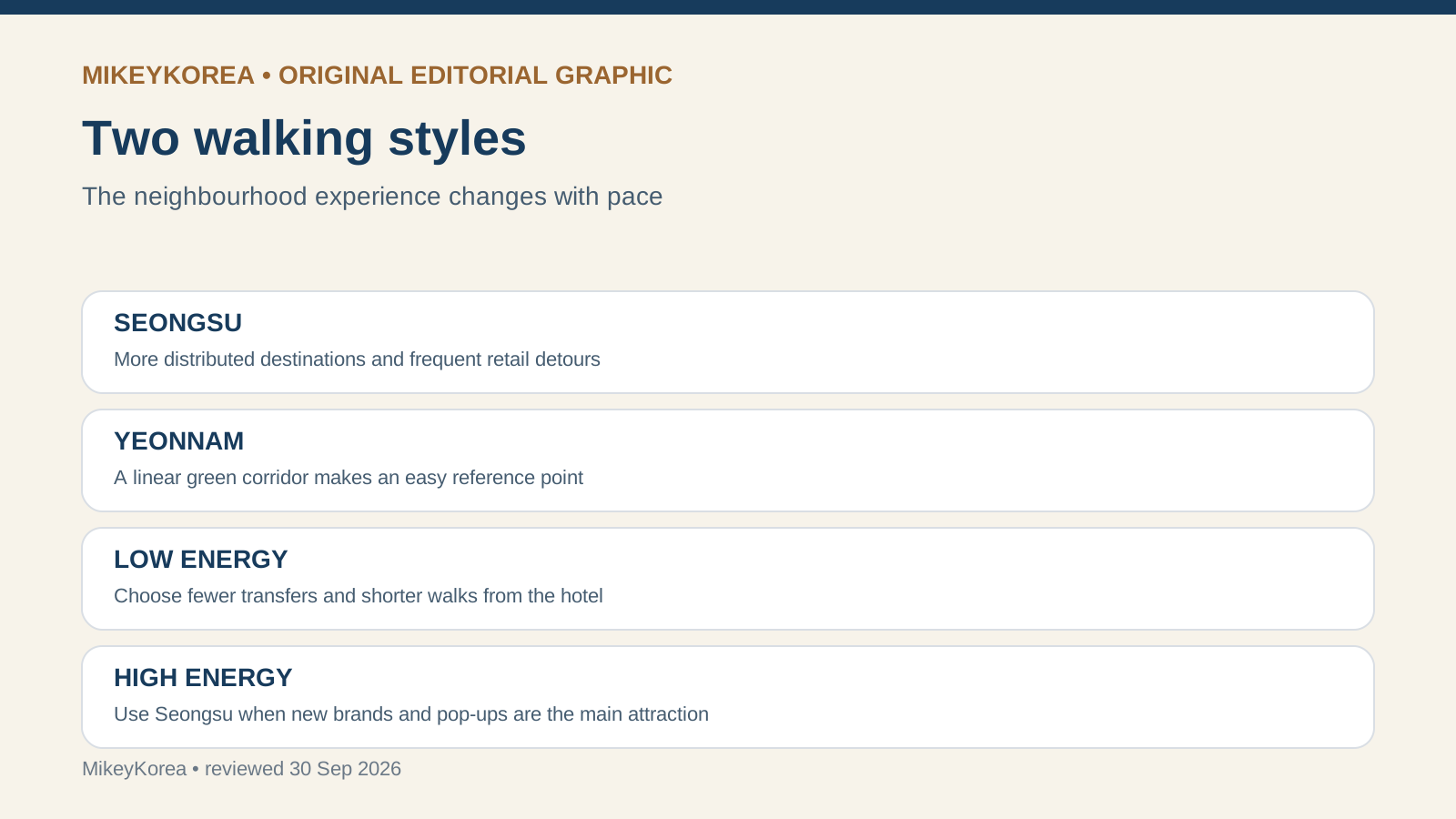
The attraction is distributed. Seoul Forest, Yeonmujang-gil, cafés, flagship stores and pop-ups are not one compact mall. KTO's suggested Seongsu courses are roughly 2–3 km even before you add detours, queues and shopping. If you chase several viral pop-ups, the afternoon can become a mission rather than a gentle introduction.
Choose two anchors maximum: for example Seoul Forest + one café + one retail/pop-up zone. Anything else is a bonus.
Yeonnam-dong: a neighbourhood rather than a shopping project
VISITKOREA describes Yeonnam-dong near Hongik University Station as a district of art spaces, concept cafés, restaurants, guesthouses, editorial shops and fashion stores. The Gyeongui Line Forest Park—often nicknamed “Yeontral Park”—turns a former railway corridor into a green route through the area.
Seoul's own Yeonnam material emphasises low-rise residential alleys, small workshops, wine shops, hidden galleries and a warmer, lived-in neighbourhood feel. That is exactly why it works after a flight: you can stop whenever you want without feeling that you failed to complete an attraction.
If you arrived on AREX and are staying in Hongdae
Yeonnam is particularly efficient. Hongik University Station is on the AREX all-stop line, so you can check bags at the hotel and walk into Yeonnam without adding another long subway journey. For a first afternoon, avoiding unnecessary transport is often a better use of time than reaching the “hottest” neighbourhood immediately.
If you are staying east or south of central Seoul
Seongsu may be more logical. It connects naturally with Seoul Forest and the eastern side of the city. If the next day's plan already includes Seongsu, Seoul Forest or Gangnam-side activities, visiting there first can reduce duplicated cross-city travel.
Café experience: destination café versus accidental café
In Seongsu, cafés are often destinations—large spaces, converted factories, dramatic interiors, new bakeries or brand collaborations. In Yeonnam, the better memory may come from choosing a small café because you happened to like the street it was on.
Neither is objectively better. The question is whether you want design spectacle or neighbourhood drift.
Shopping: Seongsu wins if shopping is the point
Seongsu is the stronger choice for new Korean brands, concept retail and pop-ups. KTO explicitly presents it as a leading trend district with domestic designer showrooms and fashion/luxury pop-ups. Yeonnam has shops, but retail is less likely to dominate the afternoon.
Walking and mobility
Neither district should be advertised as universally “easy.” Seongsu can require longer distances between specific stores. Yeonnam's park spine helps orientation, but side alleys can still add steps, uneven surfaces or extra walking. For someone with reduced mobility, choose a single café and one nearby block rather than trying to “do the district.”
Weather changes the result
On a beautiful mild day, Yeonnam's park-and-alley pattern is hard to beat for a gentle arrival. In heavy rain, Seongsu's larger cafés and retail interiors may provide better indoor anchors—though moving between them can still require outdoor walks. In midsummer heat, whichever district is closer to your hotel may be the better choice.
Two 3-hour first-afternoon routes
Gentle Yeonnam
- Start at Hongik University Station.
- Walk a short section of Gyeongui Line Forest Park.
- Choose one café from a side street—not necessarily the most famous one.
- Browse one or two small shops.
- Have an early dinner nearby and return to the hotel before fatigue catches up.
Focused Seongsu
- Begin at Seoul Forest for 30–45 minutes.
- Move toward one preselected café or flagship.
- Choose one pop-up / concept-store cluster.
- Stop for dinner before trying to add another neighbourhood.
The MikeyKorea first-afternoon rule
If you are excited but tired, choose Yeonnam. If you are energised by discovery, choose Seongsu. The point of the first afternoon is not to win Seoul. It is to arrive well enough that tomorrow still feels exciting.
Sources
- VISITKOREA — Seongsu-dong / Seoul Forest suggested course
- VISITKOREA — Seongsu-dong Street
- VISITKOREA — Yeonnam-dong
- Seoul Metropolitan Government — Yeonnam-dong
Last verified: 29 September 2026. Individual cafés, stores and pop-ups change quickly; the neighbourhood decision framework is designed to remain useful.
Use the neighbourhood choice to simplify the rest of your first day
Choose the neighbourhood that leaves the easiest return journey from your accommodation, not the one with the longest list of cafés. If you are still deciding on a base, compare where to stay in Seoul on a first visit. For the trip itself, keep the Seoul subway starter guide handy, and use the Korea map-app comparison when an English place name does not produce a useful local result.
A practical first-afternoon rule is to set one anchor, one optional stop and a clear return point. That leaves enough structure to avoid unnecessary transfers while still giving you room to notice a park, shop or café that looks more appealing in person than it did on a list. On rainy, very hot or low-energy days, shorten the walking segment first rather than trying to preserve every saved stop.
Use the guide, then test your own situation
Use the related Mikey Korea decision tools to turn the practical context in this guide into a plan built around your own trip.
Related Guides
First Trip to Korea: A Decision-First Planning Guide
Plan a first Korea trip around the decisions that actually change the experience: entry paperwork, where to stay, airport transfer, transport, connectivity, payment backup and the first 48 hours.
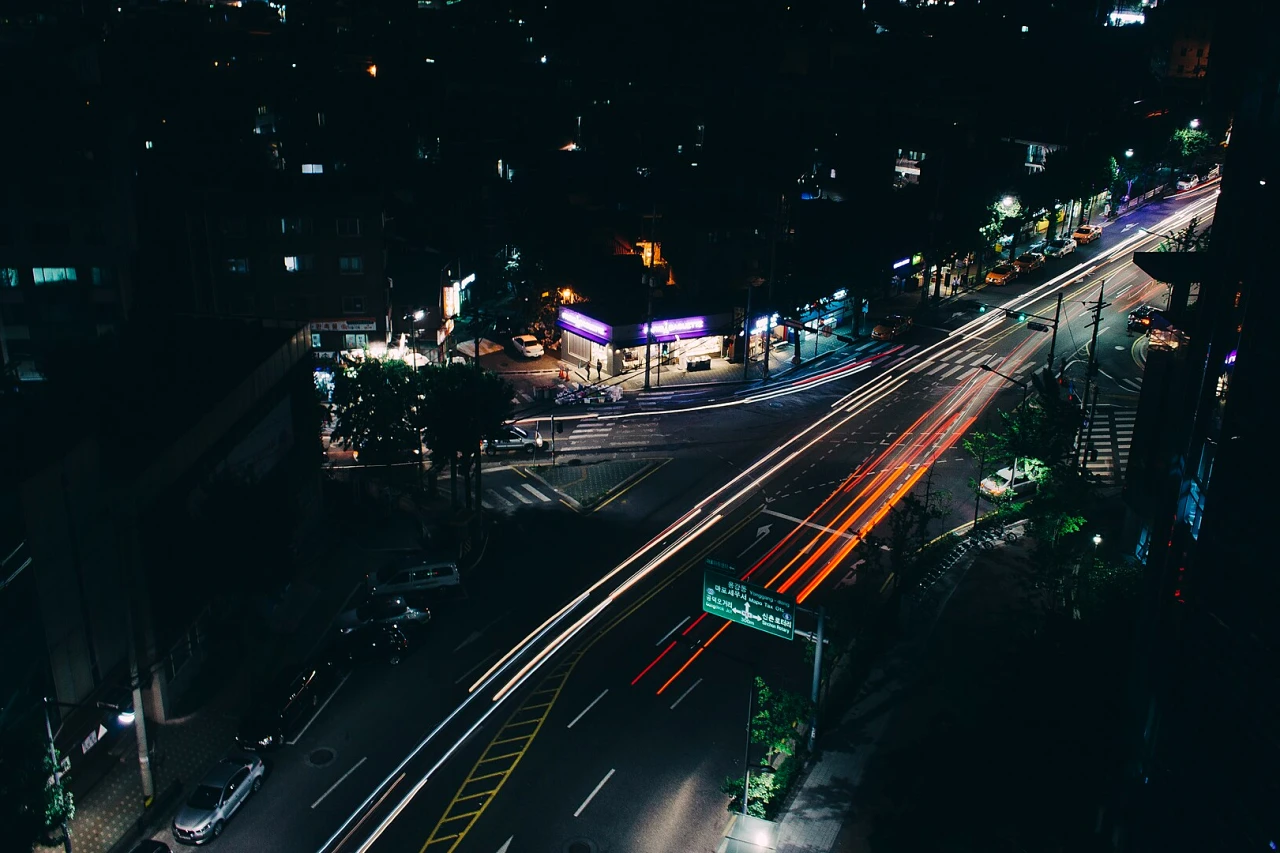
Where to Stay in Seoul by Age, Mobility & Travel Style
Choose a Seoul neighbourhood by the way you actually travel: age as a proxy for pace, walking tolerance, nightlife, shopping, family needs, airport access and the trips you will repeat.
Incheon Airport to Seoul: Transfer Guide
Compare AREX, airport bus and taxi from Incheon Airport to Seoul using the factors that change the real answer: group size, luggage, hotel district, final transfer and arrival time.