Where to Stay in Seoul by Age, Mobility & Travel Style
Choose a Seoul neighbourhood by the way you actually travel: age as a proxy for pace, walking tolerance, nightlife, shopping, family needs, airport access and the trips you will repeat.
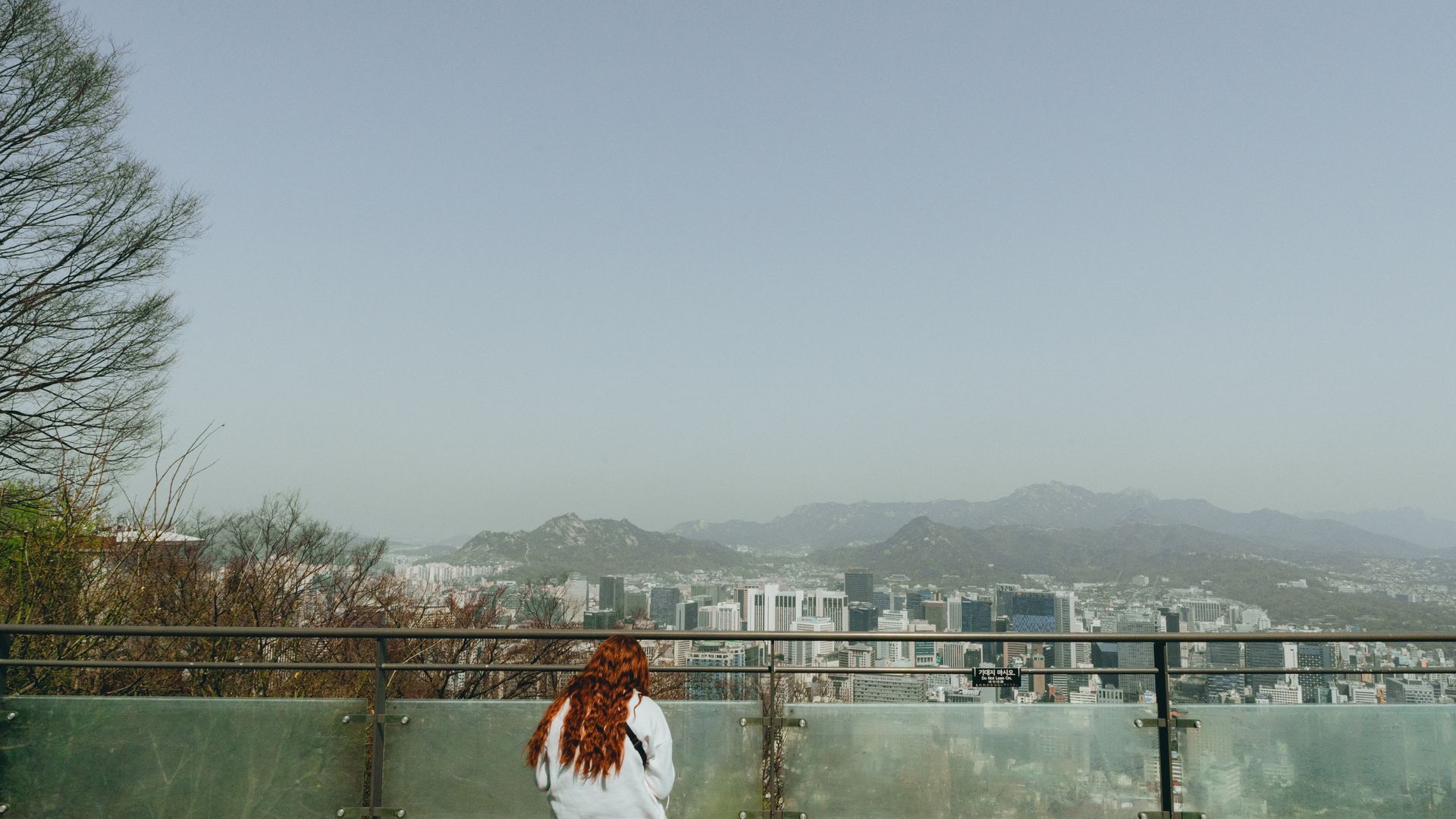
Age is a pace clue; the hotel decision is really about repeated journeys
Use age only as a proxy for pace and mobility. The better fit comes from walking tolerance, nightlife, family needs, shopping, culture, airport access and the exact hotel-to-station route.
Most "where to stay in Seoul" guides sort neighbourhoods by reputation: Myeongdong for shopping, Hongdae for nightlife, Gangnam for modern Seoul. That is useful, but incomplete. The better question is how you travel. Two visitors of the same age can need completely different bases. A 65-year-old who loves late-night bars may be happier in Itaewon than a 28-year-old who wants quiet mornings near the palaces. A family with a stroller may care more about lifts and a short flat walk to the station than about being in the trendiest district.
This guide therefore uses age, mobility, travel pace and interests together. Age is only a proxy for likely needs; it is never a rule or a judgment about what somebody should enjoy.
The age-and-pace framework
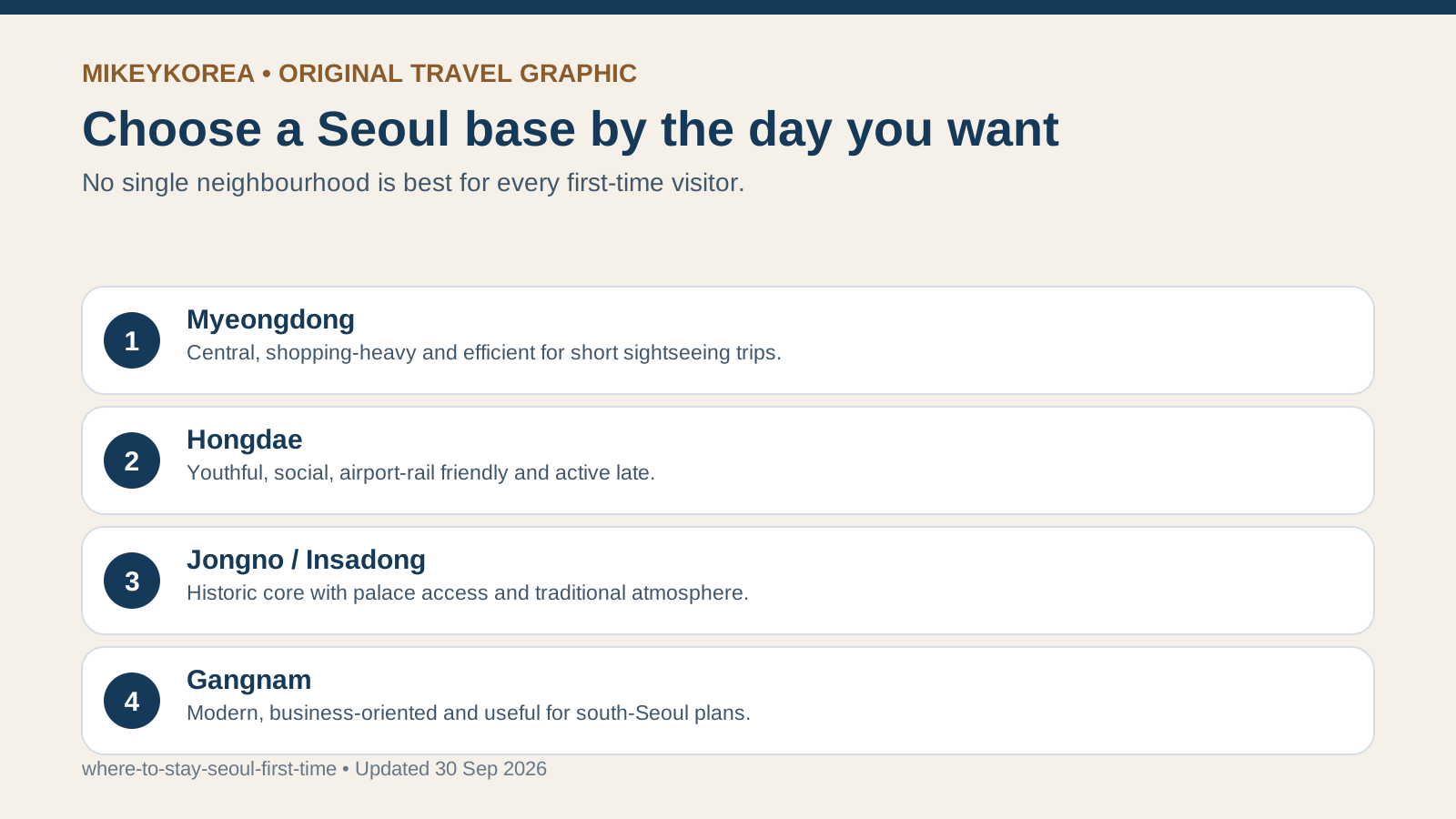
| Profile | Often values | Areas to examine first |
|---|---|---|
| 20s / highly social | Nightlife, cafés, late transport, budget, meeting people | Hongdae/Yeonnam, Itaewon; add Seongsu if nightlife is less important than design/cafés. |
| 30s–40s / balanced city break | Food, design, shopping, hotel quality, transport balance | Myeongdong/City Hall, Seongsu, Gangnam/COEX, Jongno depending interests. |
| 50s–60s / first-time sightseeing | Centrality, taxis, hotel comfort, major sights, less wasted travel | Myeongdong/City Hall, Jongno/Insadong, selected Gangnam hotels for south-Seoul plans. |
| 70+ or mobility-sensitive | Flat walking, lifts, short station access, taxi drop-off, fewer transfers | Exact-hotel screening matters more than district. Start with City Hall/Myeongdong or major-road hotels in Jongno. |
| Family | Room size, food choice, transport simplicity, child-friendly days | Jamsil, Myeongdong/City Hall, selected Hongdae family apartments/hotels. |
| Couple | Restaurants, atmosphere, evening walks, hotel experience | Hannam/Itaewon, Seongsu, Jongno/Insadong, premium central hotels. |
| Solo traveller | Easy meals, active streets, transport, late-evening confidence | Hongdae, Myeongdong, Jongno; choose according to nightlife versus culture. |
Myeongdong / City Hall: easiest all-rounder for many first visits
This area works because it compresses several needs into one base: central transport, dense food and shopping, easy taxi recognition, and reasonable access to palaces, markets and Seoul Station. It is especially useful when sightseeing time is limited or when somebody in the group does not want complicated transfers. It is less compelling if your priority is independent nightlife, neighbourhood atmosphere or a local residential feel.
Best fit: first-time visitors, 40s–70s, families who value simple navigation, shoppers, short stays. Check carefully: room size, tourist density and the exact slope/exit around your hotel.
Jongno / Insadong: strongest for historic Seoul
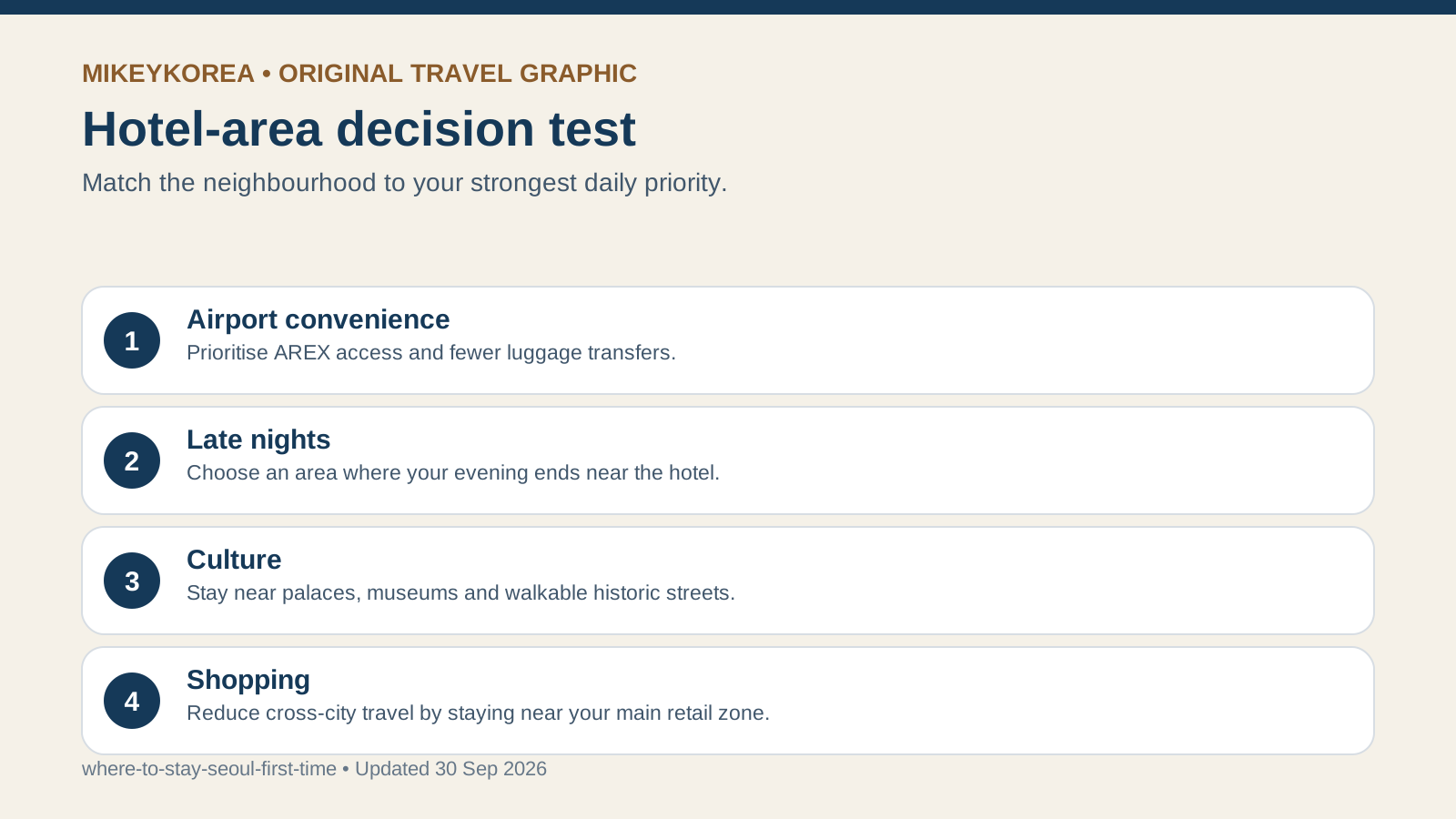
If palaces, Bukchon, traditional streets and older Seoul are central to the trip, Jongno and Insadong reduce repeated cross-city journeys. The atmosphere is calmer than Hongdae and generally more culture-focused. Some streets and older properties can involve steps, uneven lanes or longer walks, so mobility-sensitive travellers should inspect the exact hotel approach.
Best fit: culture-first travellers, photographers, 40s–70s, repeat visitors who want a quieter central base. Check carefully: lift access, station exit and taxi drop-off point.
Hongdae / Yeonnam: energy, airport access and late evenings
Hongdae combines the Airport Railroad corridor with restaurants, bars, music and a very active evening scene. The trade-off is noise and stimulation. Yeonnam can feel softer while retaining access to the same broad area. It can suit younger travellers, but it also suits any age that values cafés, independent shops and social evenings.
Best fit: 20s–40s, solo travellers, nightlife, airport convenience. Check carefully: weekend noise, distance from Hongik University Station and whether the route to your accommodation has stairs.
Itaewon / Hannam: international dining and adult nightlife
Itaewon and Hannam offer international restaurants, bars, galleries and a more cosmopolitan evening scene. The biggest practical caution is terrain. Some of the most attractive streets sit on slopes. A hotel that looks close on a map can feel very different with luggage or reduced walking tolerance.
Best fit: couples, food-focused travellers, adult nightlife, repeat visitors. Check carefully: hill gradient and distance to the nearest useful station exit.
Gangnam / COEX: polished, business-friendly and south-Seoul focused
Gangnam makes sense when your actual plans are south of the river: COEX, business meetings, premium shopping, clinics or restaurants in Gangnam and nearby districts. It is not automatically efficient for a palace-heavy first trip. Staying in Gangnam and commuting north every day can erase the comfort advantage of the hotel.
Best fit: business, luxury hotels, shopping, medical/beauty appointments, repeat visitors. Check carefully: how many planned days are actually north of the river.
Seongsu: design, cafés and contemporary Seoul
Seongsu is attractive for design, cafés, pop-ups and contemporary retail. It works better as a lifestyle choice than as the default base for every first-time visitor. If you want to spend substantial time in Seongsu, eastern Seoul or around Seoul Forest, it can be excellent. If every day starts at Gyeongbokgung or Myeongdong, a central base may be more efficient.
Jamsil: families, Lotte World and self-contained convenience
Jamsil can be very practical for families whose plans centre on Lotte World, Seoul Sky, shopping and east/south-east Seoul. Large complexes offer weather-proof days. The trade-off is distance from the palace and older downtown clusters.
For older or mobility-sensitive travellers, inspect the hotel—not just the district
This is the most overlooked rule. In Seoul, two hotels in the same neighbourhood can differ dramatically in effort. Before booking, check:
- Walking distance from the correct station exit, not the station centre pin.
- Whether that exit has an escalator or lift.
- Whether the final 200–400 metres are uphill.
- Whether a taxi can stop directly at the entrance.
- Whether breakfast, convenience stores and simple restaurants are close enough to avoid an extra trip.
Age is a clue; travel style makes the decision
A useful way to choose is to score your priorities from 0 to 5: walking tolerance, nightlife, quiet, historic sights, shopping, food, airport convenience and hotel comfort. That is exactly why MikeyKorea's Seoul Neighbourhood Matcher exists. Use age only to remind yourself about pace and mobility, then let the real preferences drive the result.
Continue planning from here
Use the next step that matches the decision you are making now: Seoul Neighbourhood Matcher, airport-to-Seoul transfer guide, Seoul subway guide. These links are selected to continue the same travel task rather than send you back to a generic category page.
Sources and methodology
MikeyKorea method: district character comes from official Seoul visitor guidance; the age/mobility segmentation is a transparent editorial planning framework, not a demographic claim that people of a certain age prefer a certain area.
Use the guide, then test your own situation
Weight the things that matter to you instead of choosing a district from a generic best-neighbourhood list.
Related Guides
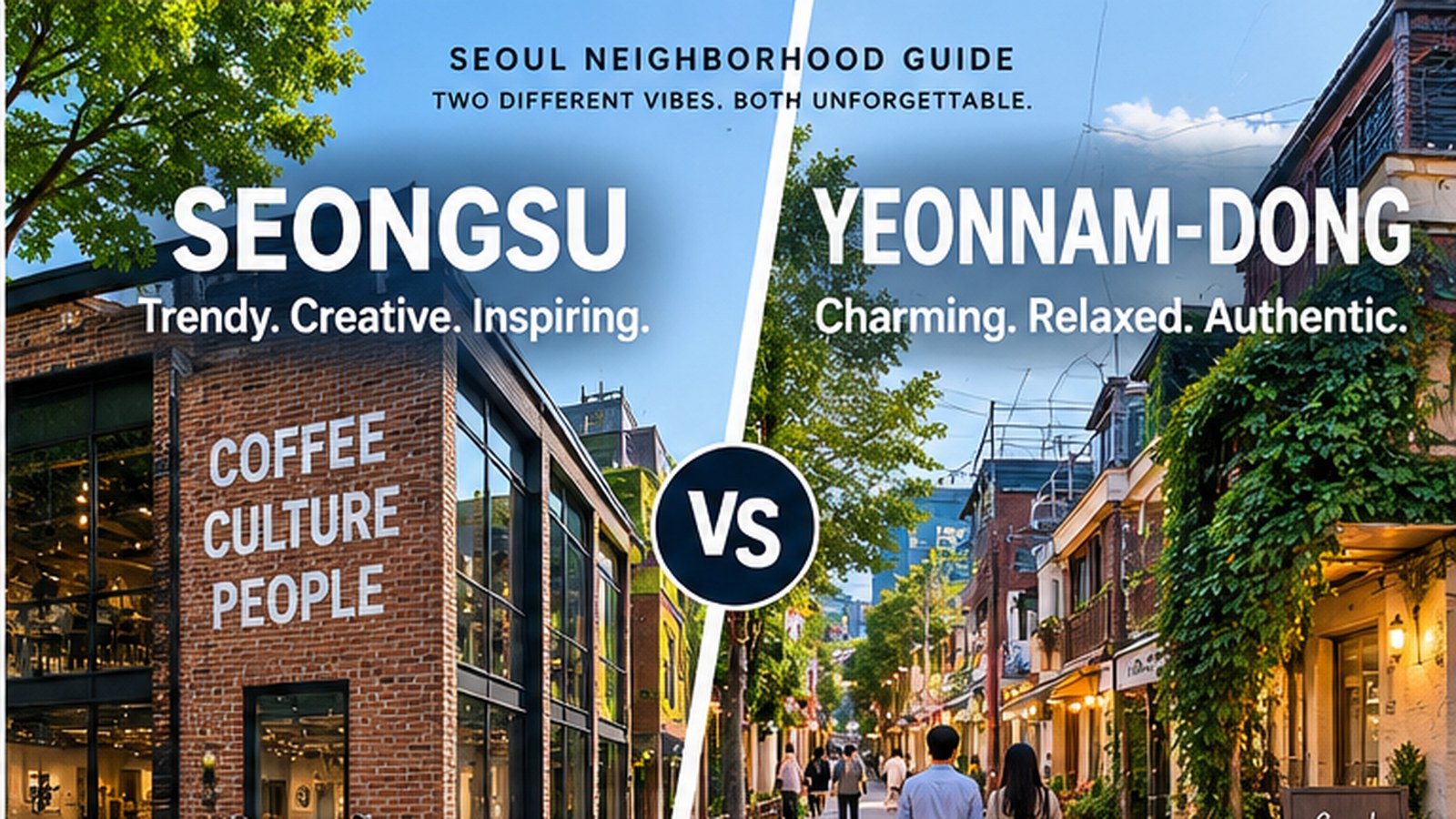
Seongsu or Yeonnam-dong? Choose Your First Seoul Afternoon by Energy Level
Both are excellent café-and-neighbourhood districts, but they solve different first-afternoon needs: Seongsu for trend discovery and pop-ups; Yeonnam for a softer park-and-alley stroll near Hongdae.
First Trip to Korea: A Decision-First Planning Guide
Plan a first Korea trip around the decisions that actually change the experience: entry paperwork, where to stay, airport transfer, transport, connectivity, payment backup and the first 48 hours.
Incheon Airport to Seoul: Transfer Guide
Compare AREX, airport bus and taxi from Incheon Airport to Seoul using the factors that change the real answer: group size, luggage, hotel district, final transfer and arrival time.