First Trip to Korea: A Decision-First Planning Guide
Plan a first Korea trip around the decisions that actually change the experience: entry paperwork, where to stay, airport transfer, transport, connectivity, payment backup and the first 48 hours.
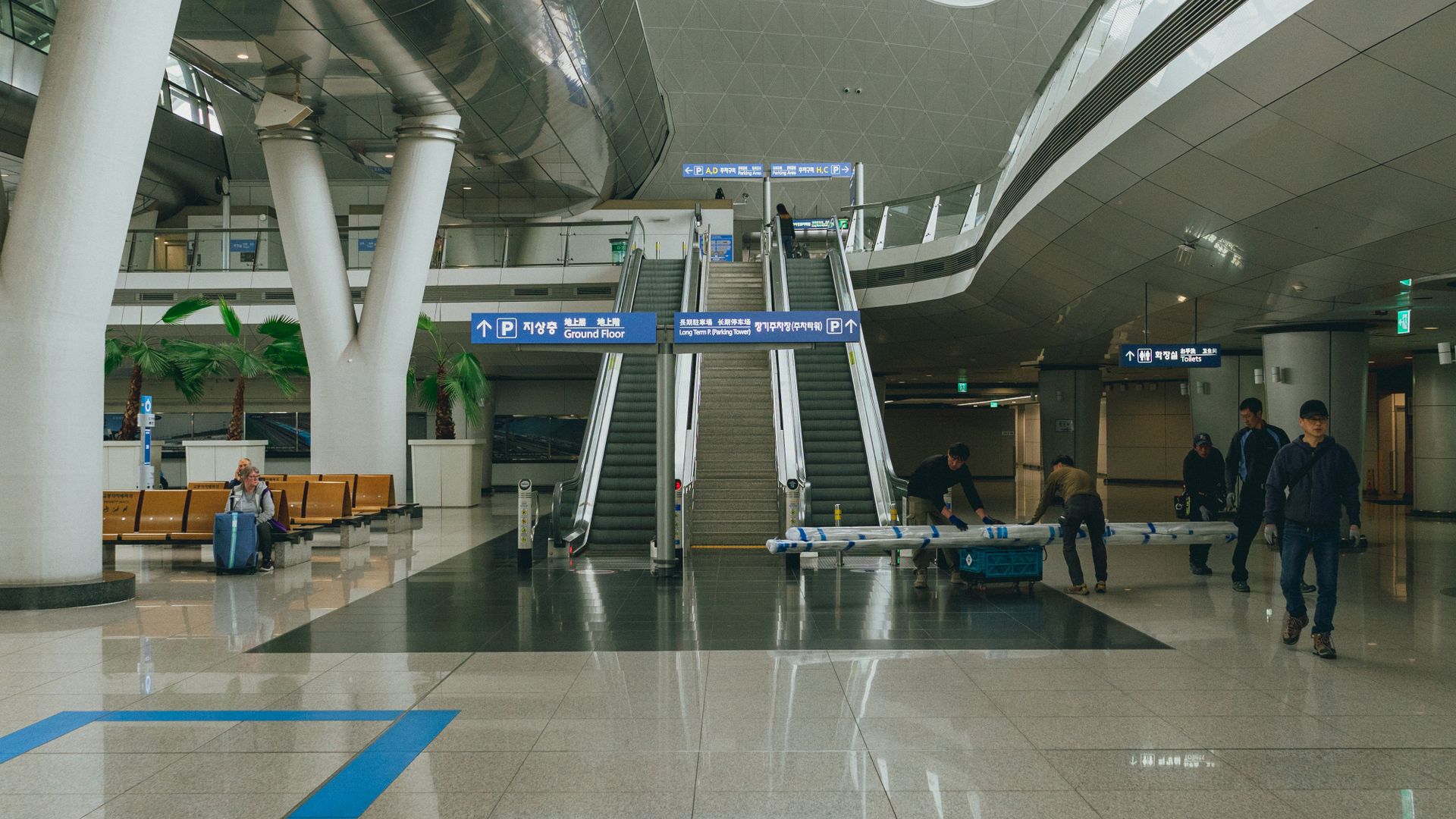
Solve the decisions that are expensive to get wrong
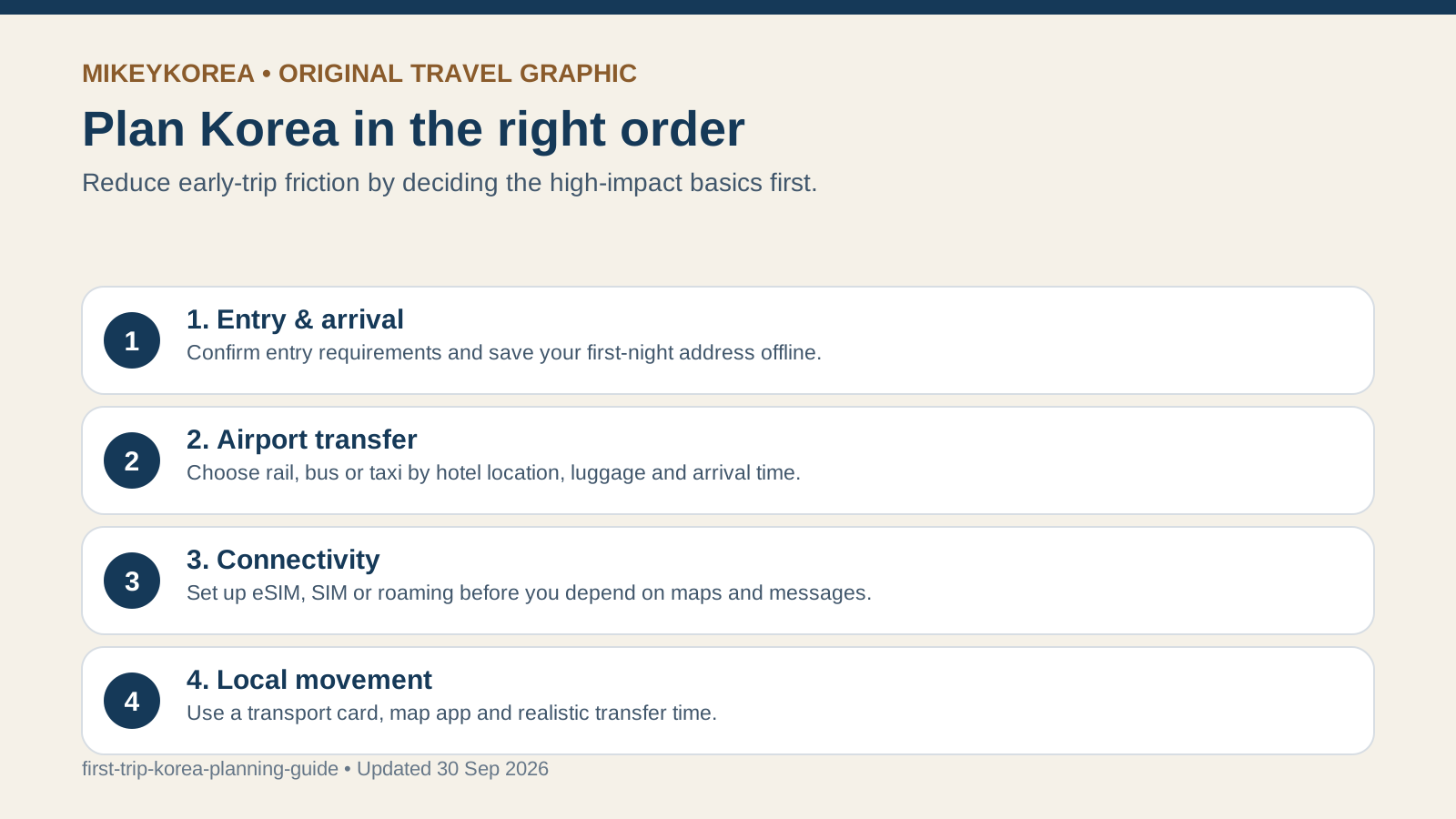
Start with entry requirements, hotel base, airport transfer, connectivity, payment backup and your first 48 hours. Attractions are easier to rearrange than these six foundations.
A first trip to Korea becomes much easier when you stop planning it as a list of attractions and start planning it as a sequence of decisions. The order matters. A beautiful hotel in the wrong district creates repeated travel. A cheap airport transfer can become an expensive nuisance if it leaves you with two suitcases and a final staircase. A bargain eSIM is not a bargain if your phone is locked. And the most carefully researched café list does not help much if you reach Seoul late at night without a working data connection or a usable payment backup.
This guide is therefore built around what kind of traveller you are, what you need to solve before arrival, and what must work during your first 48 hours. It is not a substitute for nationality-specific visa advice. Immigration rules change and are based on your passport, status and purpose of travel. As of 27 September 2026, Korea's official K-ETA service states that the temporary exemption for the countries and regions already covered by that exemption runs through 31 December 2026. Korea's official e-Arrival Card service allows required travellers to submit the declaration online within three days before arrival and does not charge a fee.
Start with your traveller profile, not a generic itinerary
| Traveller profile | What usually matters most | MikeyKorea planning emphasis |
|---|---|---|
| First trip to East Asia | Reducing uncertainty | Choose a simple Seoul base, direct airport route, working data, and a payment backup before adding day trips. |
| Experienced Asia traveller | Flexibility and neighbourhood character | Use Seoul as a base but spend more time comparing districts, local food and independent areas. |
| 3–4 day visit | Time efficiency | Minimise hotel changes and repeated cross-city travel. One central base usually beats a broader itinerary. |
| 7–10 day visit | Balance | Separate Seoul decisions from intercity decisions; do not choose every transport product as if the whole trip stays inside Seoul. |
| Family or multi-generation group | Door-to-door friction | Weight room size, lifts, taxi access, luggage and meal flexibility more heavily than nightlife. |
| Lower walking tolerance | Station exits, hills, transfers | Choose the exact hotel location, not merely the neighbourhood name. A shorter, flatter walk can matter more than a fashionable district. |
| Solo traveller | Simple logistics and flexible meals | Prioritise a base with strong evening transport, plenty of single-person dining, and easy airport access. |
Decision 1: confirm what your passport requires
Do this before booking non-refundable extras. Check the official K-ETA and Korean immigration services for your passport, travel purpose and length of stay. If you are exempt from K-ETA in 2026, do not assume that the exemption answers every arrival-form question. The official e-Arrival Card site includes a navigator that asks whether you hold a visa, K-ETA, residence card or none of these and tells you whether a declaration is required.
Decision 2: choose the Seoul base by the journeys you will repeat
The best neighbourhood is not simply the district with the most famous sights. It is the place that reduces the journeys you will make again and again: hotel to dinner, hotel to palace area, hotel to nightlife, hotel to a shopping district, and hotel back to the airport. A first-time visitor who wants palaces and traditional areas may value Jongno or Insadong. Someone who wants late-night cafés and social energy may value Hongdae. A traveller who wants central shopping and straightforward sightseeing may prefer Myeongdong or City Hall. A south-Seoul business or luxury-shopping trip can justify Gangnam or COEX.
Use the Seoul Neighbourhood Matcher after reading the dedicated neighbourhood guide. It lets you weight the priorities instead of accepting a generic "best area" list.
Decision 3: plan the airport journey door to door
Do not compare only the advertised travel time to Seoul Station. Compare the whole route to your hotel. AREX is predictable and inexpensive; an airport bus can remove a difficult transfer when its stop is near your hotel; a taxi becomes more attractive when several people split the fare, when the final subway transfer is awkward, or when the flight arrives late. The Airport Transfer Decider is designed for exactly this decision.
Decision 4: solve data and payments before you need them
Your phone should be carrier-unlocked before you rely on a local eSIM or SIM. Decide whether you merely need data or whether you genuinely need a Korean 010 mobile number and ordinary voice/SMS. Then set up at least two payment paths: a mainstream international card for ordinary purchases, plus a transport solution and a small cash reserve. Korea is highly card-oriented, but transport-card funding rules are not identical to shop-card acceptance rules.
Use the SIM/eSIM Decision Tool and the updated T-money and foreign-card compatibility guide rather than treating "my card works in Korea" as a single yes/no question.
The first 48 hours: a low-friction sequence
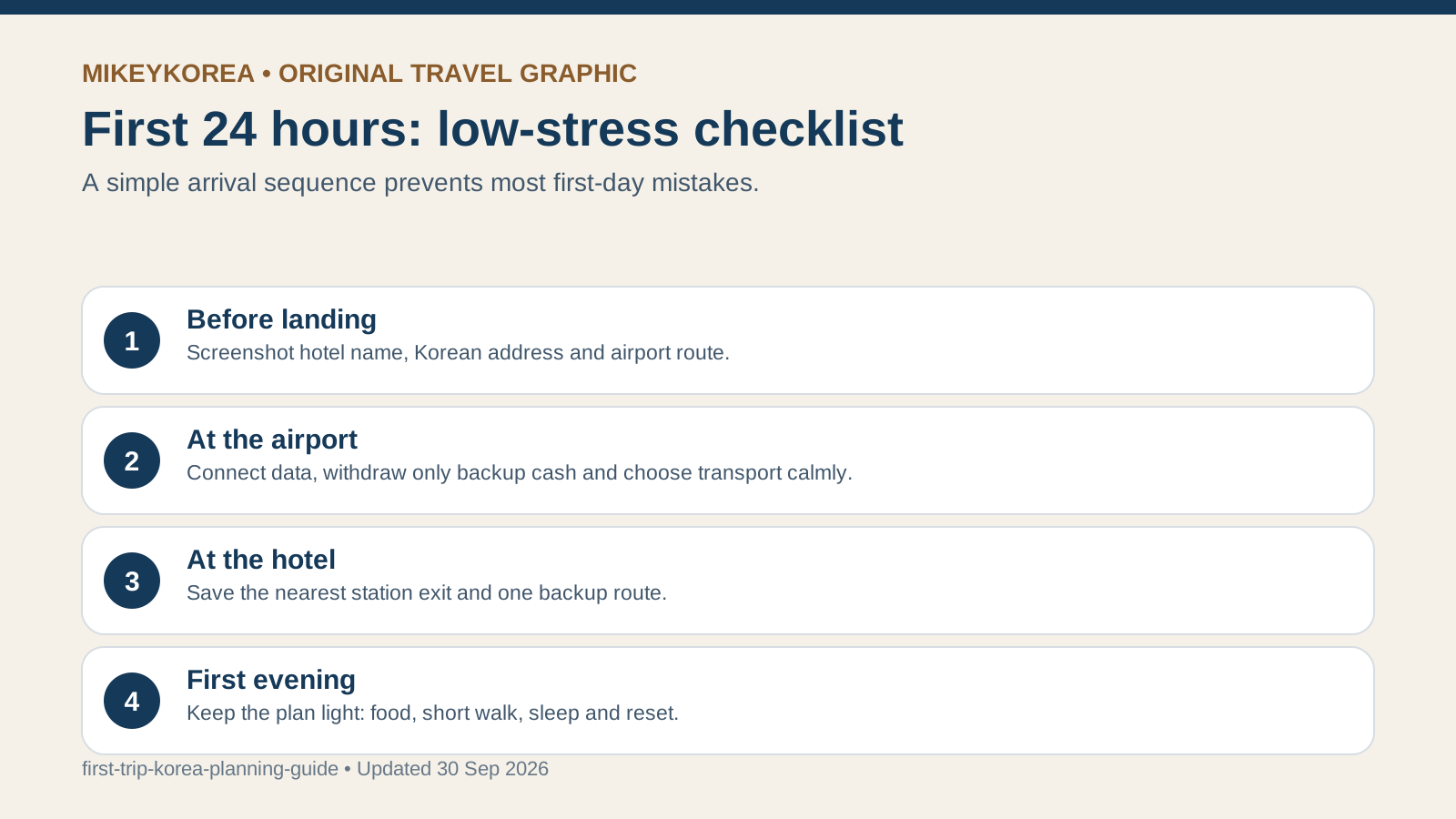
- Before departure: verify passport/entry requirements, install essential apps, confirm that your phone is unlocked, and save your hotel address in Korean and English.
- At Incheon Airport: activate data before leaving the terminal if possible. Then choose rail, bus or taxi based on the real hotel route and your arrival time.
- At the hotel: ask where the nearest practical subway entrance is—not just the nearest station name. Large stations can have exits separated by several blocks.
- First evening: keep it local. Use the neighbourhood around your hotel for food, a convenience store and a short walk instead of crossing Seoul after a long flight.
- First full day: group nearby sights. Seoul rewards geographical clustering much more than a checklist that jumps between opposite sides of the city.
- Before major shopping: understand tax-refund eligibility and carry your passport when needed for immediate refund.
What should be booked early, and what can wait?
| Usually worth deciding early | Often better left flexible |
|---|---|
| Hotel district and exact location | Most ordinary restaurant meals |
| Airport arrival plan for late-night flights | Daily café choices |
| Phone compatibility and connectivity plan | Most local subway journeys |
| Intercity rail on very busy holiday dates | Neighbourhood browsing |
| High-demand attractions with timed entry | Weather-sensitive outdoor stops |
MikeyKorea's planning method
We separate high-cost mistakes from easy-to-fix choices. Choosing the wrong hotel base, relying on an incompatible phone, or arriving after your planned transport stops running is expensive in time and stress. Choosing the "wrong" café is not. Plan the irreversible decisions first and leave the enjoyable small decisions flexible.
Sources and current-rule checks
- K-ETA — 2026 temporary exemption notice
- Republic of Korea official e-Arrival Card
- Seoul Metropolitan Government — 2026 Tourist Guidebook
Checked: 27 September 2026. Entry rules are nationality- and status-specific. Always confirm them on the official government service before travel.
Use the guide, then test your own situation
Turn the broad plan into numbers: estimate the trip budget, then test when to go and where to base yourself.
Related Guides
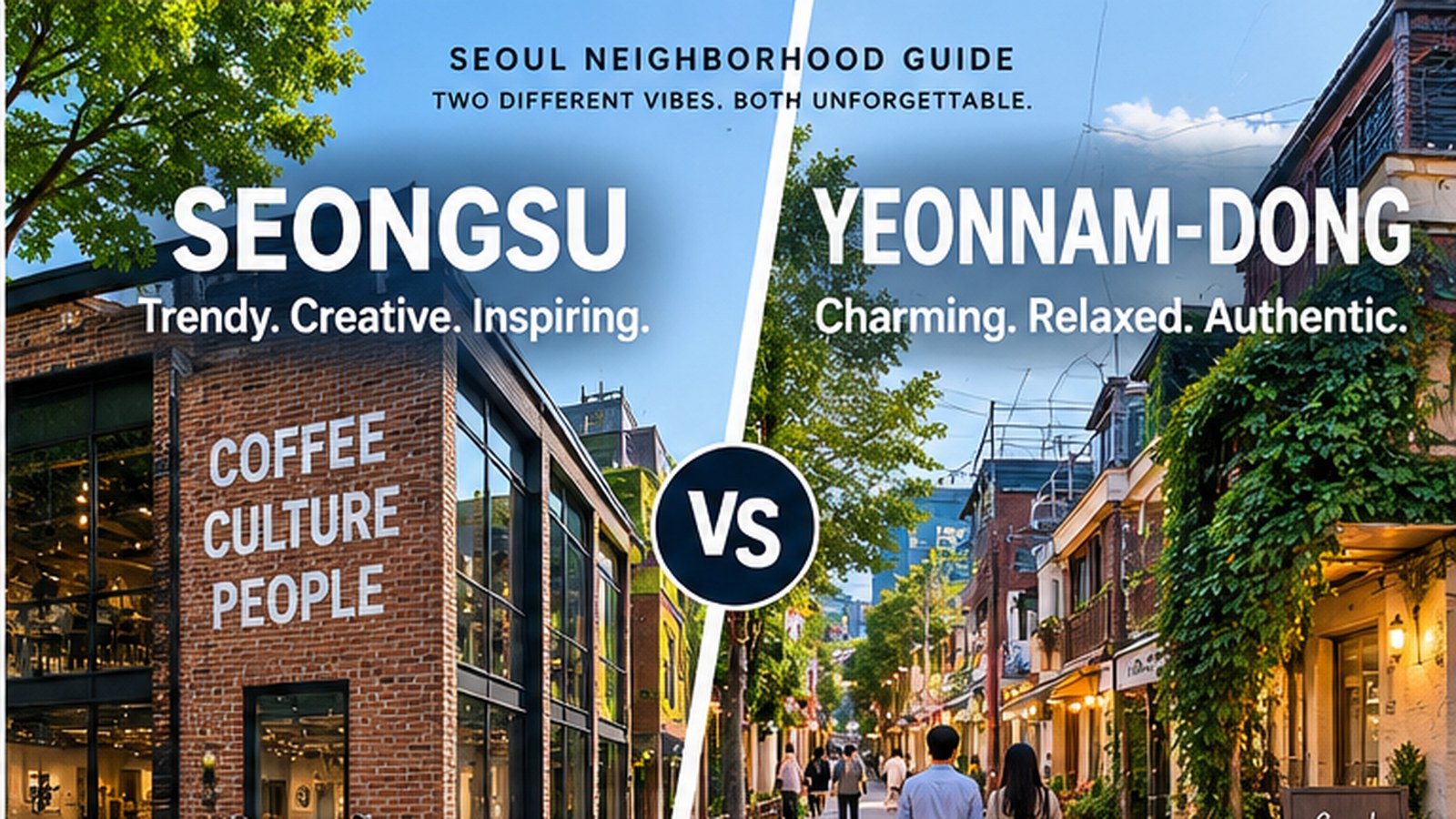
Seongsu or Yeonnam-dong? Choose Your First Seoul Afternoon by Energy Level
Both are excellent café-and-neighbourhood districts, but they solve different first-afternoon needs: Seongsu for trend discovery and pop-ups; Yeonnam for a softer park-and-alley stroll near Hongdae.
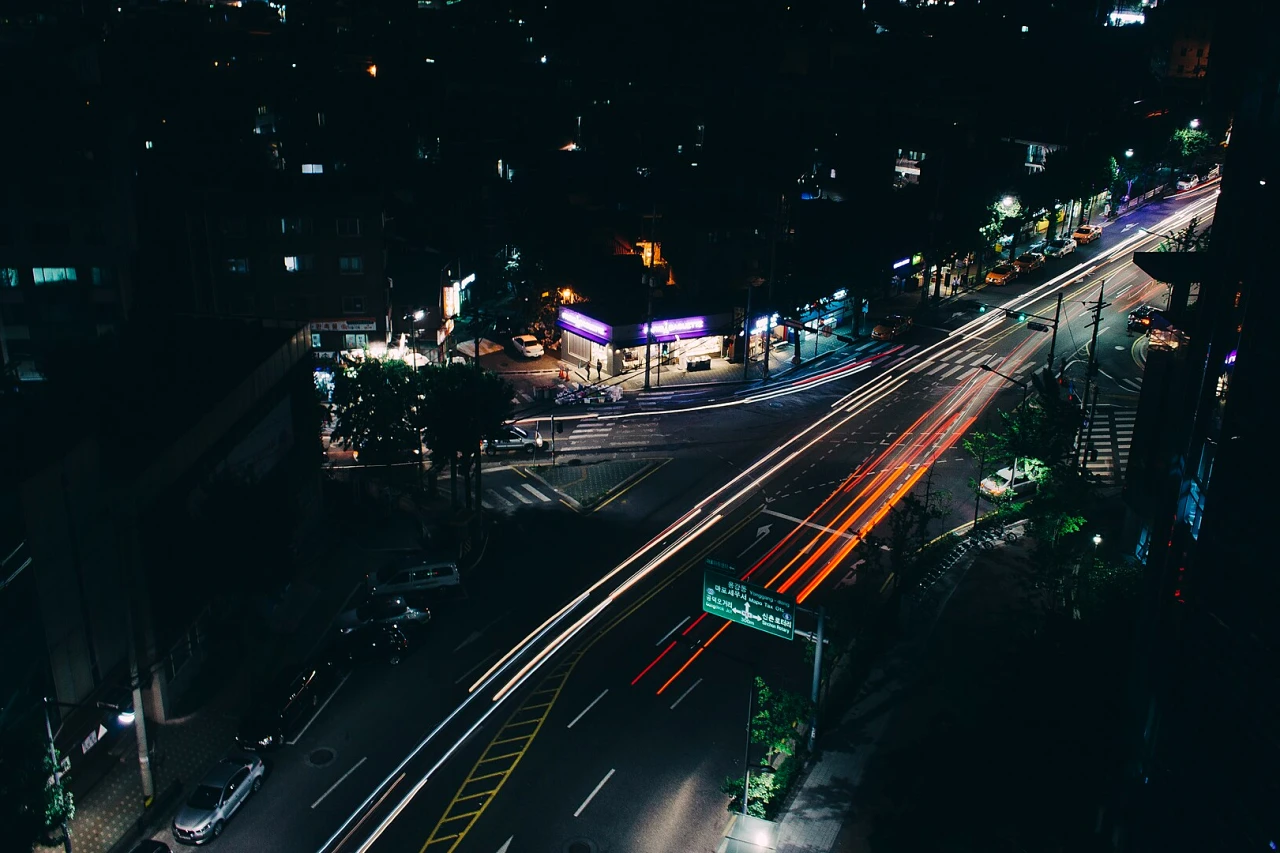
Where to Stay in Seoul by Age, Mobility & Travel Style
Choose a Seoul neighbourhood by the way you actually travel: age as a proxy for pace, walking tolerance, nightlife, shopping, family needs, airport access and the trips you will repeat.
Incheon Airport to Seoul: Transfer Guide
Compare AREX, airport bus and taxi from Incheon Airport to Seoul using the factors that change the real answer: group size, luggage, hotel district, final transfer and arrival time.