Seoul Subway Guide: Exits & Transfers
The hard part of Seoul's subway is not buying a ticket—it is choosing the right exit, avoiding unnecessary transfers, handling luggage and matching the route to your walking tolerance.
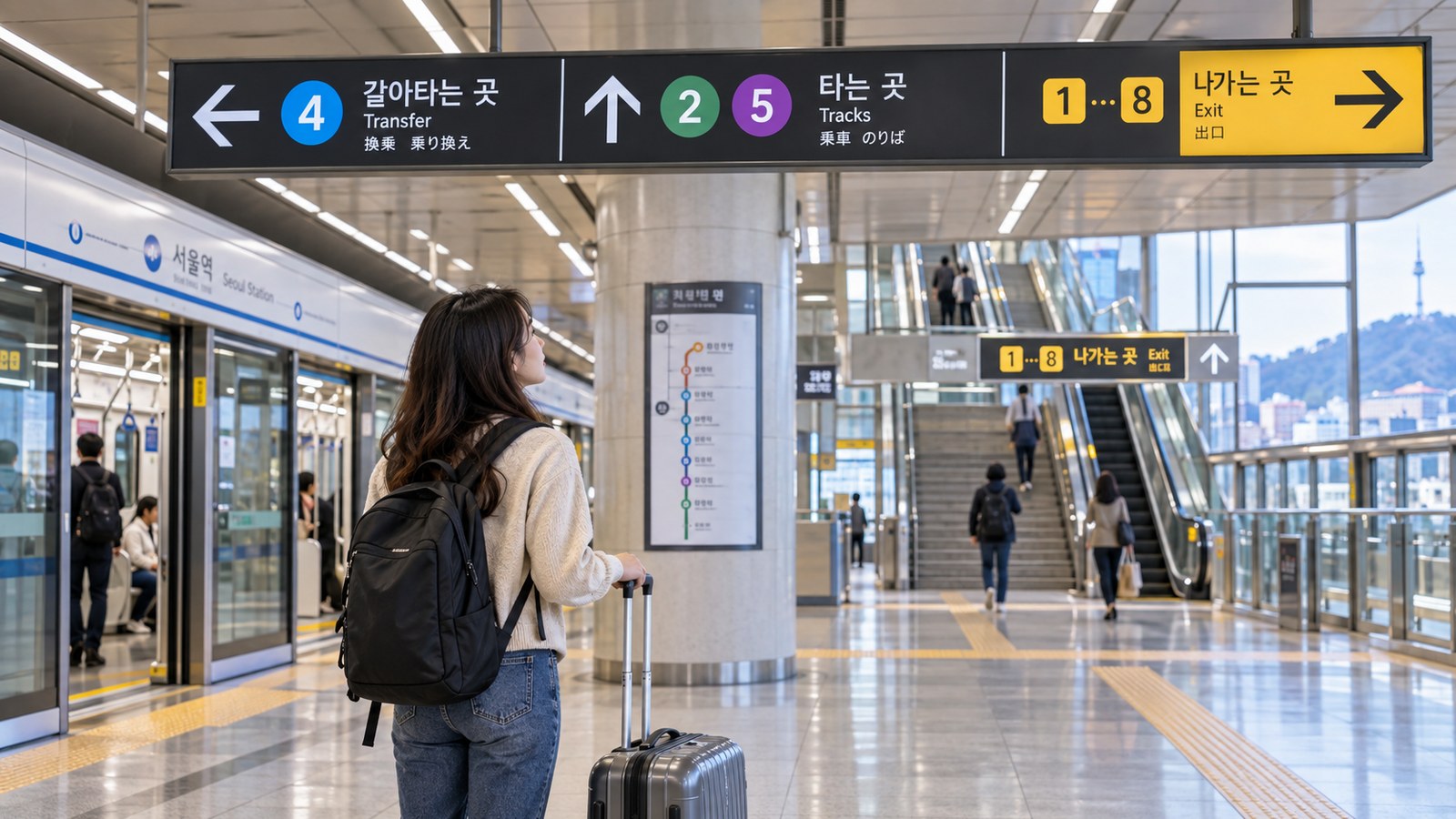
The hard part is the exit, transfer and final walk—not buying the ticket
Choose the correct exit before arrival, prefer simpler transfers when time differences are small, and treat luggage or mobility needs as route inputs.
Seoul's subway is easy to understand on a map and surprisingly easy to use badly in real life. The biggest visitor mistakes are not buying the wrong ticket. They are choosing an exit on the wrong side of a huge intersection, accepting a route with two exhausting transfers because it saves three minutes on paper, carrying a large suitcase through a complex station, or assuming every elevator reaches the entrance you actually need.
This guide focuses on effort, not just fare. For many travellers—especially families, visitors in their 50s–70s, people with knee or mobility issues, or anyone carrying luggage—the best route is not always the route with the smallest number on the screen.
Current Seoul subway fare basics
Seoul's official transport page lists the adult base fare at KRW 1,550 with a transport card and KRW 1,650 for a single-ride ticket. A card user taking the first ride before 06:30 receives a 20% early-morning discount. The metropolitan integrated fare system starts with the relevant base fare and adds KRW 100 for each additional 5 km after the base 10 km.
Transfer discounts depend on tapping correctly. You must tap the transport card when boarding and getting off. Transfers are generally recognised when the next boarding occurs within 30 minutes, extended to 60 minutes from 21:00 to 07:00, and up to four transfers (five boardings) can be included under the integrated system rules.
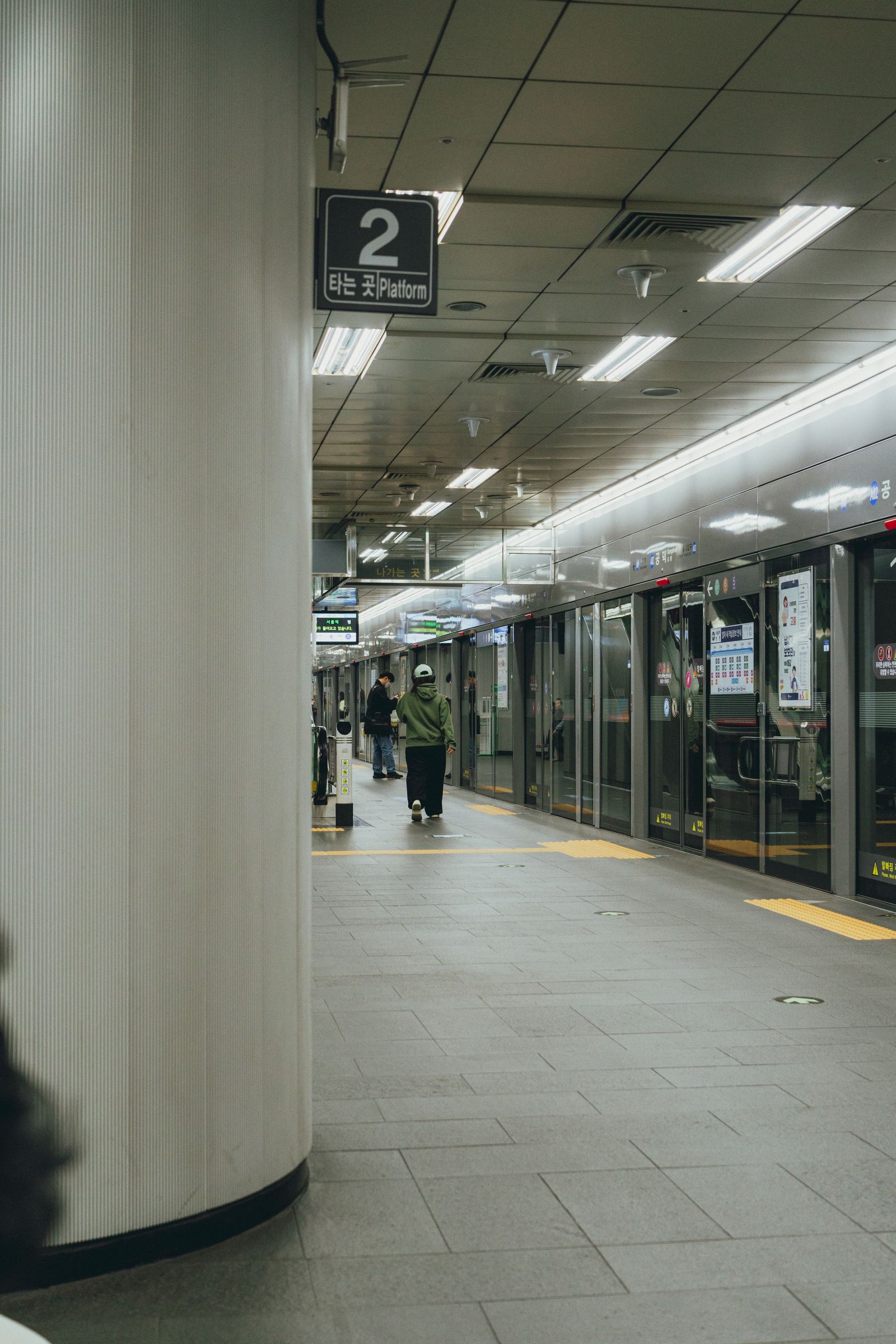
Rule 1: choose the exit before you choose the station
Large Seoul stations can have many exits spread across several blocks. “Hotel is near Gangnam Station” is not enough information. The difference between the correct exit and the wrong exit can be a major road crossing, a long underground corridor, stairs or an uphill walk.
Before leaving your hotel—or before getting off the train—check the exact exit number in Naver Map or Kakao Map. If you have luggage or reduced walking tolerance, also check whether the exit has an elevator or escalator. Seoul publishes station-by-station accessibility facilities, including elevator and escalator counts.
Rule 2: minimise hard transfers, not all transfers
A one-transfer route can be easier than a direct line if the direct station leaves you with a 15-minute walk. Conversely, a “fastest” route with two giant transfer stations can be much harder than staying on one line for five extra minutes.
MikeyKorea's route check is:
- How many transfers?
- How long is the transfer walk?
- Are there stairs or an elevator path?
- How far is the final exit from the destination?
- Is the time saving actually meaningful?
If two routes differ by only 3–5 minutes, choose the one with less physical friction unless you have a reason not to.
Rule 3: luggage changes the answer
Seoul Station, Hongik University, Jamsil, Myeong-dong, Gimpo International Airport and Jongno 3-ga are among the stations with Seoul's T-Luggage facilities. These services can store luggage and, at some locations, arrange same-day delivery. Official base storage prices vary by size and weekday/weekend; for example, current weekday four-hour base rates range from KRW 3,000 for small luggage to KRW 9,000 for XL.
If you arrive before hotel check-in, leaving luggage near a major station can be better than carrying it through several attractions. If your final hotel route requires multiple transfers, compare the cost of a short taxi from a major rail/airport stop against the effort of moving two or three suitcases through the subway.
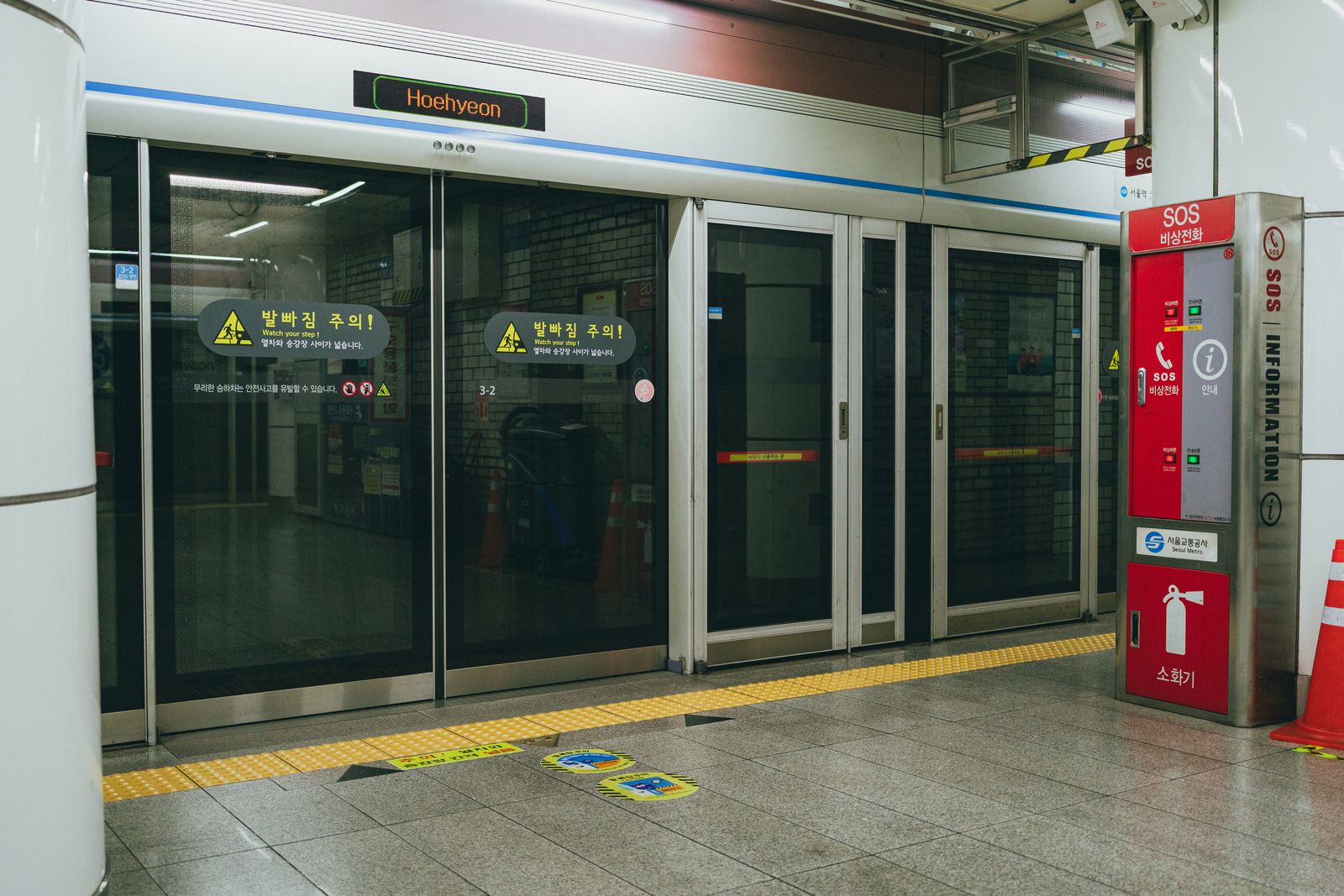
Accessibility: “the station has elevators” is not enough
Seoul publishes a detailed accessibility-facility table by station and line. Major stations often have several elevators and escalators, but the exact path can be complicated because different lines occupy different station structures. For example, Jongno 3-ga appears separately across multiple lines, each with its own elevator/escalator configuration.
For a wheelchair user, senior traveller or someone with a stroller, plan the accessible path from platform to the correct street side, not merely whether an elevator exists somewhere in the station.
Rush hour: use a comfort rule rather than a precise promise
Passenger density varies by line, station, weekday and events. As an editorial rule of thumb, weekday commuter periods around 07:30–09:00 and 17:30–19:30 can be substantially more crowded. If you have a large suitcase, stroller or low tolerance for standing in crowds, moving a trip 30–60 minutes can improve the experience more than choosing a different subway line.
The time bands above are MikeyKorea planning guidance, not an official guarantee of crowd levels.
T-money, Climate Card or single ticket?
Use a T-money-style stored-value card when you want flexibility across transport. Compare a short-term Climate Card if you expect intensive Seoul-only travel. A single-journey ticket is fine for occasional use. Since March 2026, 440 new vending machines at 273 stations on Seoul Lines 1–8 accept internationally issued credit/debit cards and mobile payments for single-journey tickets and short-term Climate Cards.
For the much more important compatibility question—foreign bank cards, MobileTmoney and direct contactless gate payment—see the T-money / Climate Card / Foreign Cards guide.
How to read a Seoul subway route like a local traveller
| Screen says | Ask yourself |
|---|---|
| 32 min, 2 transfers | Are the transfers simple cross-platform changes or long station walks? |
| 36 min, 1 transfer | Could four extra minutes save a major transfer corridor? |
| 40 min, no transfer | Is the final station exit close to the destination? |
| Taxi 25 min | Is traffic reliable at this time, and how many people are splitting the fare? |
Station-exit strategy for older travellers
If walking comfort matters, choose attractions in clusters and use the subway for the long movement between clusters. Inside each district, consider a taxi for steep or awkward final legs. Seoul is highly walkable in the sense that many places are connected, but “walkable” does not mean flat, short or comfortable for every person.
This is also why the Where to Stay in Seoul guide evaluates hotel districts partly by station access and mobility rather than age alone.
Five mistakes that cost more energy than money
- Entering the nearest station without checking the best line/exit for the destination.
- Following “fastest route” automatically when a simpler route is only a few minutes slower.
- Taking oversized luggage through peak commuter periods.
- Assuming every station exit has an elevator.
- Forgetting to tap out, which can affect transfer-fare calculation.
Useful apps
Naver Map and Kakao Map both support Korean route planning across walking, public transport and driving. Naver also provides real-time transit information and English navigation. Google Maps remains useful for place discovery and transit planning, but Korea-specific walking/driving functionality is still in transition in September 2026. See the Naver Map vs Google Maps guide.
Sources
- Seoul — Subway fares and transfer rules
- Seoul — Subway accessibility facilities
- Seoul — T-Luggage / storage facilities
- Seoul — foreign-card ticket machines, Mar 2026
Last verified: 29 September 2026. Fares and facility details can change; check the station or operator before relying on a specific lift or service.
Use the guide, then test your own situation
Once the subway system makes sense, calculate whether a pass or stored-value card better fits your actual daily use.
Related Guides

T-money vs Climate Card: Transit Guide
Understand Korea transit payment as a compatibility problem: physical T-money, Climate Card, foreign credit cards, MobileTmoney, Apple Pay, contactless tap-to-ride and where each method really works in 2026.
Naver Map vs Google Maps in Korea in 2026: Which App for Walking, Transit, Driving & Places?
Use the right map app for the task. Naver Map is still the strongest visitor default for Korean routing and local place data in September 2026, while Google Maps remains useful for familiar global place discovery and saved lists.
Airport Rail vs Airport Bus to Seoul: Which Is Better for Your Hotel?
Compare AREX all-stop, AREX Express and airport limousine buses by the whole door-to-door trip: hotel district, luggage, group size, transfer effort, traffic risk and arrival time.