Airport Rail vs Airport Bus to Seoul: Which Is Better for Your Hotel?
Compare AREX all-stop, AREX Express and airport limousine buses by the whole door-to-door trip: hotel district, luggage, group size, transfer effort, traffic risk and arrival time.
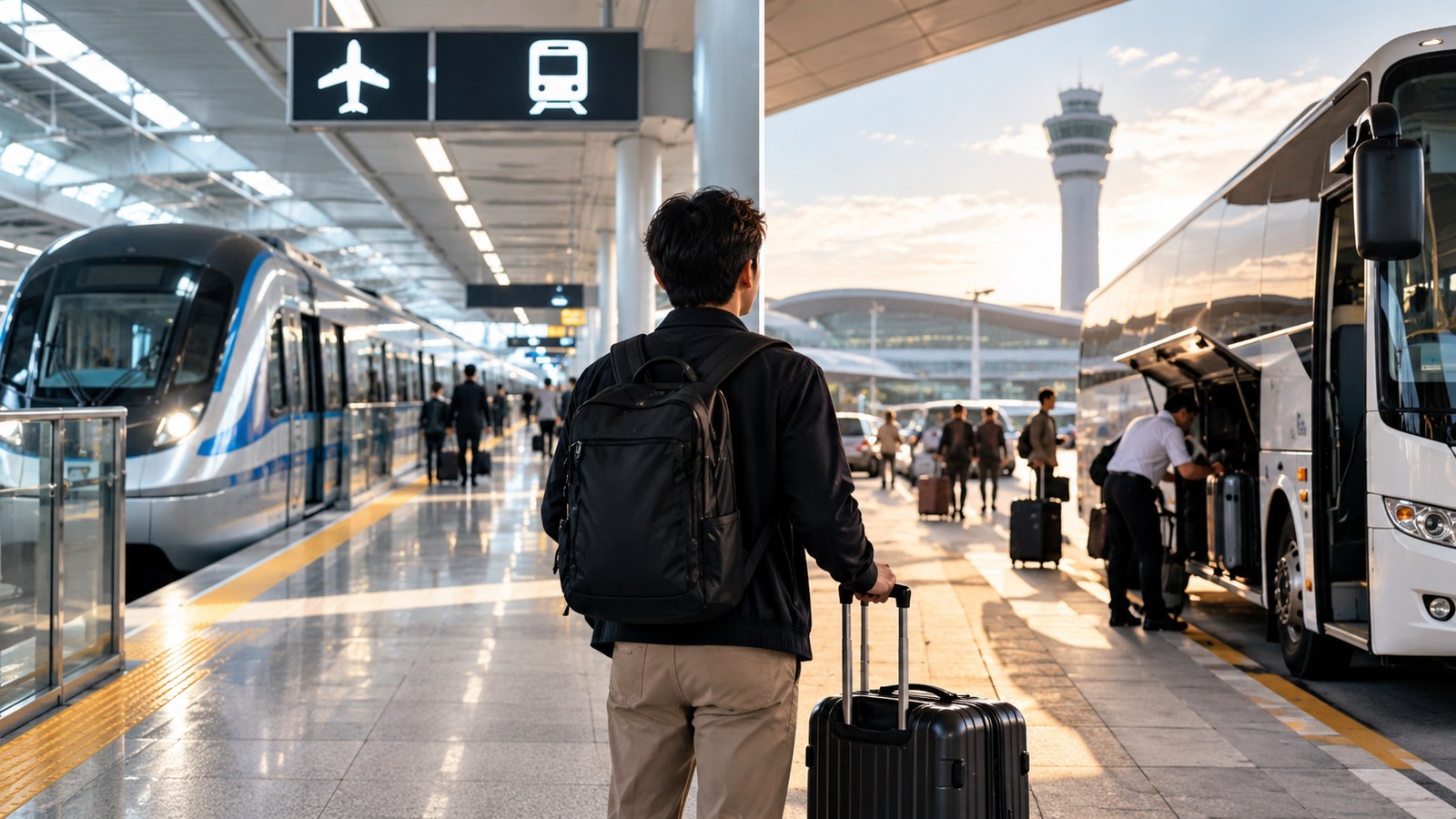
Compare the final hotel leg, not just the airport headline time
AREX is strongest when your hotel aligns with Hongdae, Gongdeok or Seoul Station. Airport bus gains value when its stop is closer to the hotel and luggage or transfers are the bigger problem.
“Train or airport bus?” sounds like a simple price-versus-comfort choice. In Seoul, it is really a door-to-door route question. The train can be faster to Seoul Station and still be harder to your hotel. The bus can be slower on paper and still get you to the lobby with less effort. Your answer changes with the hotel district, luggage, number of travellers, arrival time and how much you dislike transfers after a long flight.
This page is deliberately narrower than MikeyKorea's main Incheon Airport to Seoul guide. Here we focus on AREX rail versus airport limousine bus.
The current 2026 baseline
| Option | Current example | Best when |
|---|---|---|
| AREX all-stop | About ₩4,150–₩4,750; roughly 59 min T1 / 66 min T2 to Seoul Station | Hongdae, Gongdeok, Seoul Station, low-cost travel, frequent departures |
| AREX Express | ₩13,000; about 43 min T1 / 51 min T2 to Seoul Station | You want predictable non-stop rail and Seoul Station is genuinely convenient |
| Airport limousine | Route-specific; 6015 to Myeong-dong currently ₩17,000 adult | Your hotel is near a bus stop, you have luggage, or you want to avoid a subway transfer |
Seoul's official airport guide says the all-stop train generally departs every 5–10 minutes and the Express every 20–40 minutes. Airport-bus journey time is much more traffic-sensitive. Route 6015's operator publishes a current adult fare of ₩17,000 and notes that airport-side ticket handling changed in March 2026, so always follow the current airport booth/operator instructions rather than an old blog post.
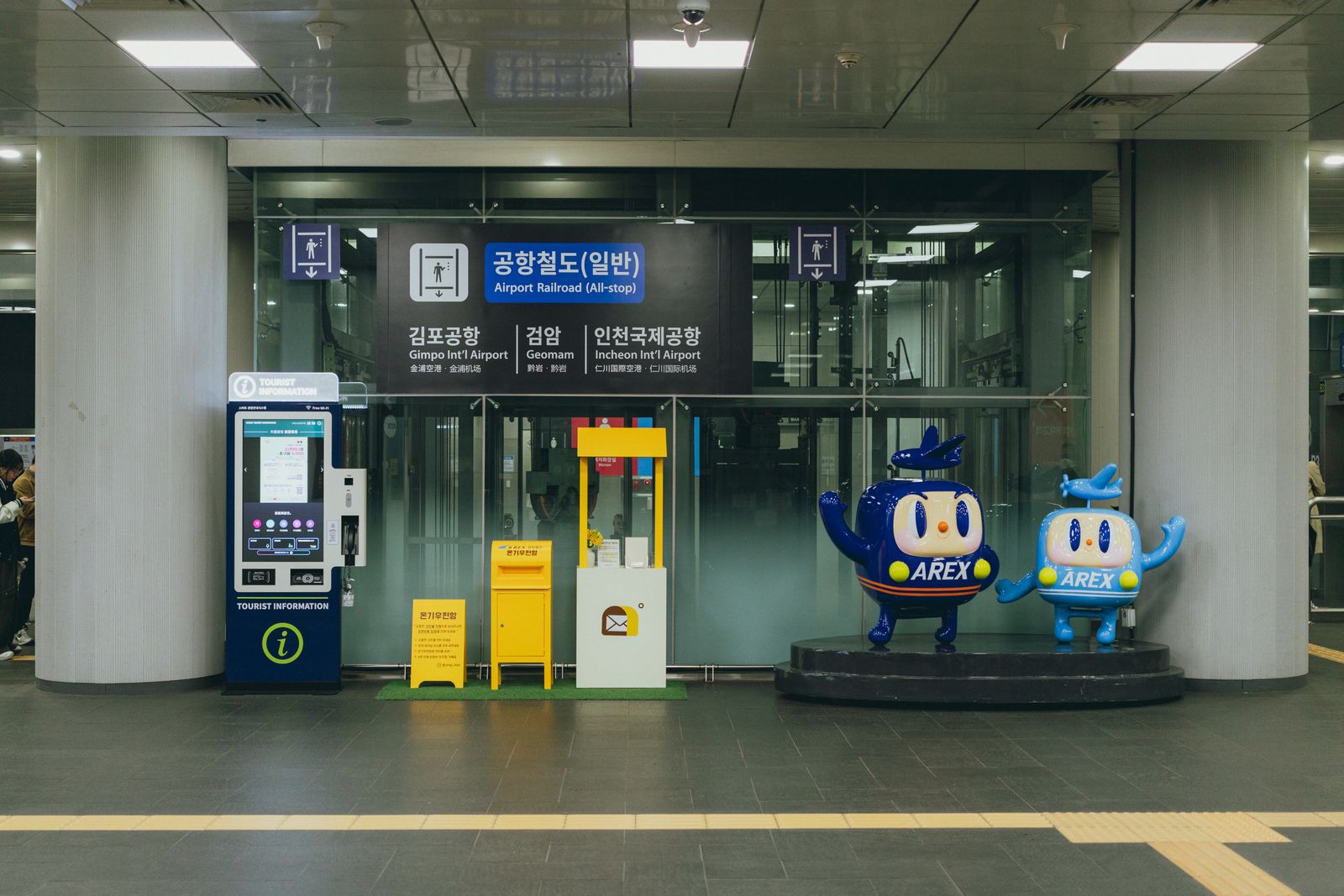
If you are staying in Hongdae: rail usually starts with an advantage
Hongik University Station sits directly on the AREX all-stop line. That means you avoid the “Seoul Station plus another transfer” problem entirely. For a solo traveller or couple with manageable luggage, the all-stop train is often hard to beat on value and predictability.
The Express does not stop at Hongdae. Taking the Express to Seoul Station and then travelling back toward Hongdae usually makes little sense unless another part of your itinerary requires Seoul Station.
If you are staying near Seoul Station: Express becomes more logical
When your hotel is genuinely close to Seoul Station—or you plan to transfer immediately to KTX—the non-stop Express has a clear purpose. The important word is “genuinely.” Seoul Station is large. A hotel that appears close on a map can still involve a long internal walk, lifts, stairs or a street crossing after you reach the terminal.
If you are staying in Myeong-dong: compare the final 20 minutes
Myeong-dong is the classic case where headline travel time can mislead. AREX gets you to Seoul Station quickly, but you still need the final hotel leg. That may mean Line 4, a taxi, or a walk with luggage. Route 6015 and other limousine services serve central hotel areas directly or with a much shorter final walk.
For one traveller with a light suitcase, rail can still be the value choice. For two travellers with large bags and a hotel close to a 6015 stop, the bus can be the more efficient experience even though the ticket costs more.
What are you actually paying for with the bus?
The extra fare buys fewer luggage decisions. You normally put large bags in the luggage compartment and sit until a stop near your destination. That is valuable after a long flight, for older travellers, for families, or when your hotel route from the rail station involves stairs and a long transfer corridor.
The trade-off is uncertainty. Road traffic can add time, especially during busy city periods. If your priority is a predictable airport-to-Seoul-Station journey, rail wins that part of the comparison.
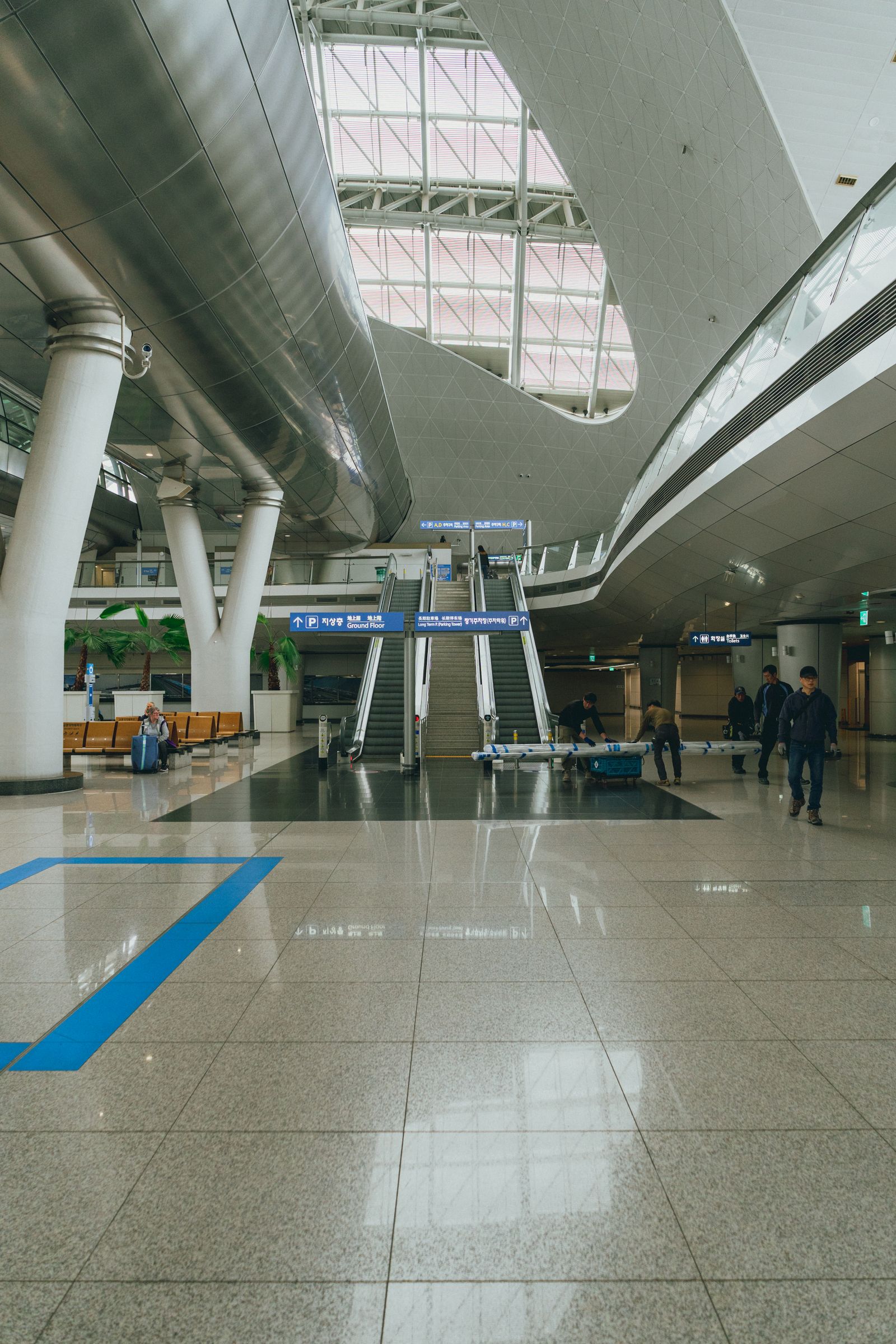
Luggage test: one suitcase is different from four
| Luggage situation | Rail impact | Bus impact |
|---|---|---|
| Backpack / cabin bag | Minimal friction | Little advantage unless stop is perfect |
| One large suitcase | Usually manageable, but transfers matter | Underfloor luggage storage is convenient |
| Two large cases per couple | Station lifts and transfer distance become important | Bus comfort advantage increases |
| Family / multiple large bags | Managing people + bags during transfer can be tiring | Direct hotel-area stop can be much easier |
Age is not the rule—mobility and fatigue are
A fit 70-year-old with one cabin bag may prefer AREX. A 28-year-old carrying two large cases may prefer the bus. Use age only as a reminder to consider standing, transfers and stairs. The real inputs are walking tolerance, luggage, jet lag and the exact hotel stop.
Arrival time matters
AREX all-stop service extends to around midnight depending on the station/train, while bus timetables are route-specific. A late arrival can turn a normally good option into a long wait or missed final service. Check the actual landing time plus immigration, baggage collection and terminal walking—not the scheduled aircraft arrival alone.
Departure day: predictability becomes more valuable
The choice back to Incheon is not necessarily the same. On departure day, traffic risk has a higher cost because you have a flight to catch. If your hotel is near an AREX station, rail's predictability becomes more valuable. If the bus stop is outside your hotel and you allow a large buffer, the convenience may still win.
The 60-second decision
- Put the exact hotel in Naver Map.
- Check the nearest AREX-compatible station and airport-bus stop.
- Add the final walk/transfer to the advertised travel time.
- Count full-size suitcases.
- Check your actual likely airport-exit time.
- If both routes are close, choose the one with less physical friction.
When neither train nor bus is the best answer
For three or four people, very late arrival, mobility needs or a difficult hotel location, a taxi can become competitive. That comparison belongs in the main Incheon Airport to Seoul: Best Route by Group, Luggage & Arrival Time guide and the Airport Transfer Decider.
Continue planning from here
Use the next step that matches the decision you are making now: Airport Transfer Decider, full airport transfer guide, where-to-stay guide. These links are selected to continue the same travel task rather than send you back to a generic category page.
Sources
- Seoul Metropolitan Government — Getting to Seoul from Incheon Airport
- Airport Limousine — Route 6015 current fare/timetable
- Seoul 2026 Tourist Guidebook — airport transport information
Last verified: 29 September 2026. Timetables, fares and airport ticketing procedures can change; always recheck your travel date.
Use the guide, then test your own situation
Compare rail, bus and taxi with your real destination, luggage and group size instead of treating one mode as universally best.
Related Guides
Seoul Subway Guide: Exits & Transfers
The hard part of Seoul's subway is not buying a ticket—it is choosing the right exit, avoiding unnecessary transfers, handling luggage and matching the route to your walking tolerance.

T-money vs Climate Card: Transit Guide
Understand Korea transit payment as a compatibility problem: physical T-money, Climate Card, foreign credit cards, MobileTmoney, Apple Pay, contactless tap-to-ride and where each method really works in 2026.
Naver Map vs Google Maps in Korea in 2026: Which App for Walking, Transit, Driving & Places?
Use the right map app for the task. Naver Map is still the strongest visitor default for Korean routing and local place data in September 2026, while Google Maps remains useful for familiar global place discovery and saved lists.