Paying in Korea: Cards, Cash & Wallets
A practical payment compatibility guide for visitors: where foreign Visa/Mastercard/AmEx/JCB/UnionPay usually work, where cash still matters, why transit payment is different and how to build a reliable backup.
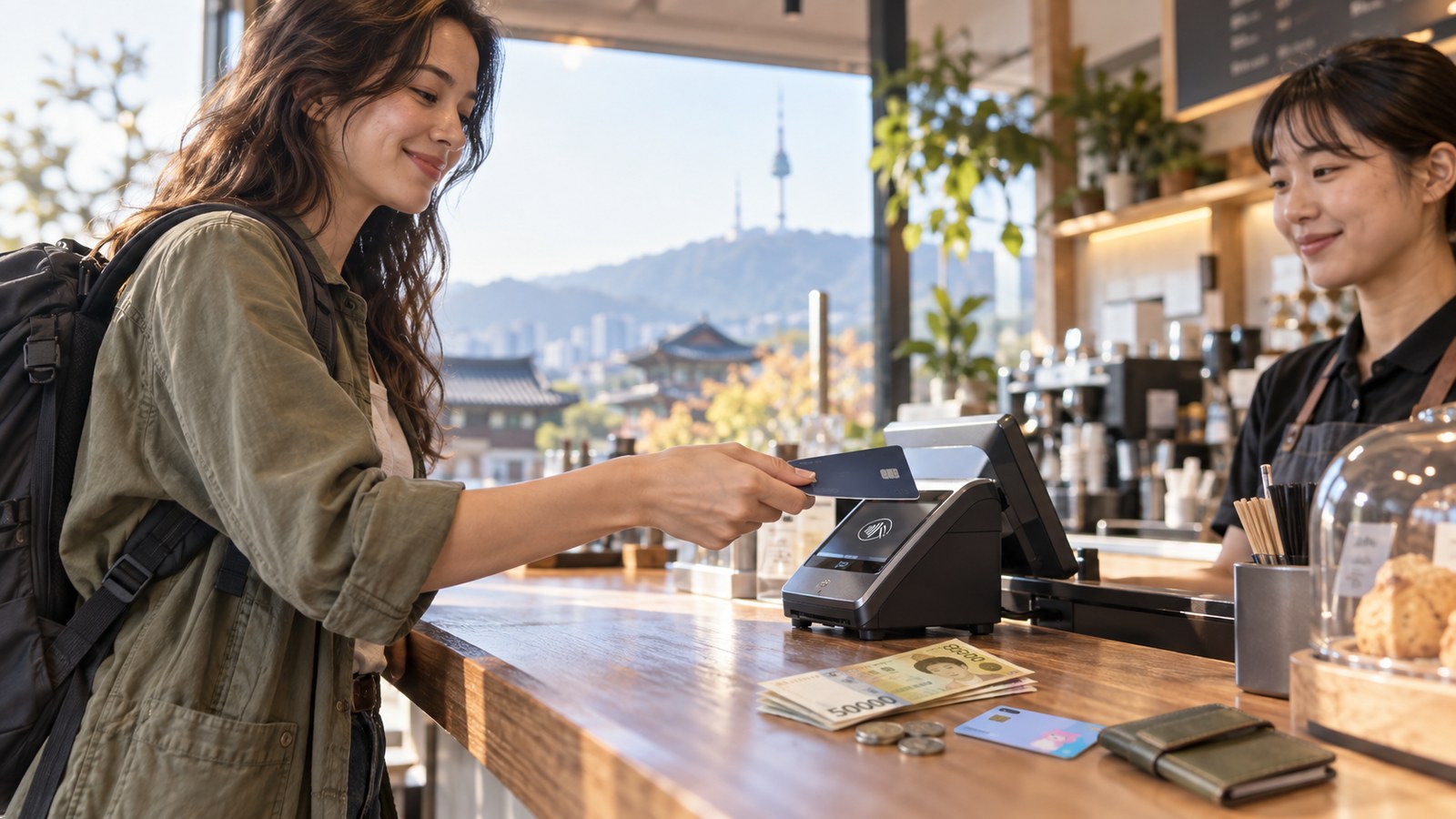
A foreign card can work at a shop and still fail as your transport solution
Use an international card for mainstream retail, a second card as backup, a deliberate T-money/Climate Card setup for transit, and a small KRW reserve for top-ups and edge cases.
Korea is highly card-friendly, but “Can I use my card in Korea?” is the wrong single question. A foreign card can work perfectly at a department store and still be useless for reloading a physical T-money card. A phone wallet can work at one NFC terminal and fail at the next shop. A taxi can accept your international card while a subway gate cannot be tapped directly with that same bank card.
The reliable strategy is to separate retail payment, transit payment, cash access and mobile-wallet acceptance. Then build one backup for each failure point.
What generally works at shops?
VISITKOREA states that credit cards are widely accepted at major hotels, department stores and general shops, and lists Visa, Mastercard and American Express among common international cards. Its shopping guidance also lists JCB and UnionPay among cards accepted at most Korean stores. That makes an international card the normal primary payment method for many visitors.
But “widely accepted” is not “universal.” Small businesses, market stalls, older terminals or a temporary network problem can still create exceptions. Your bank can also decline a transaction even when the Korean merchant accepts the network. Carry a second payment method.
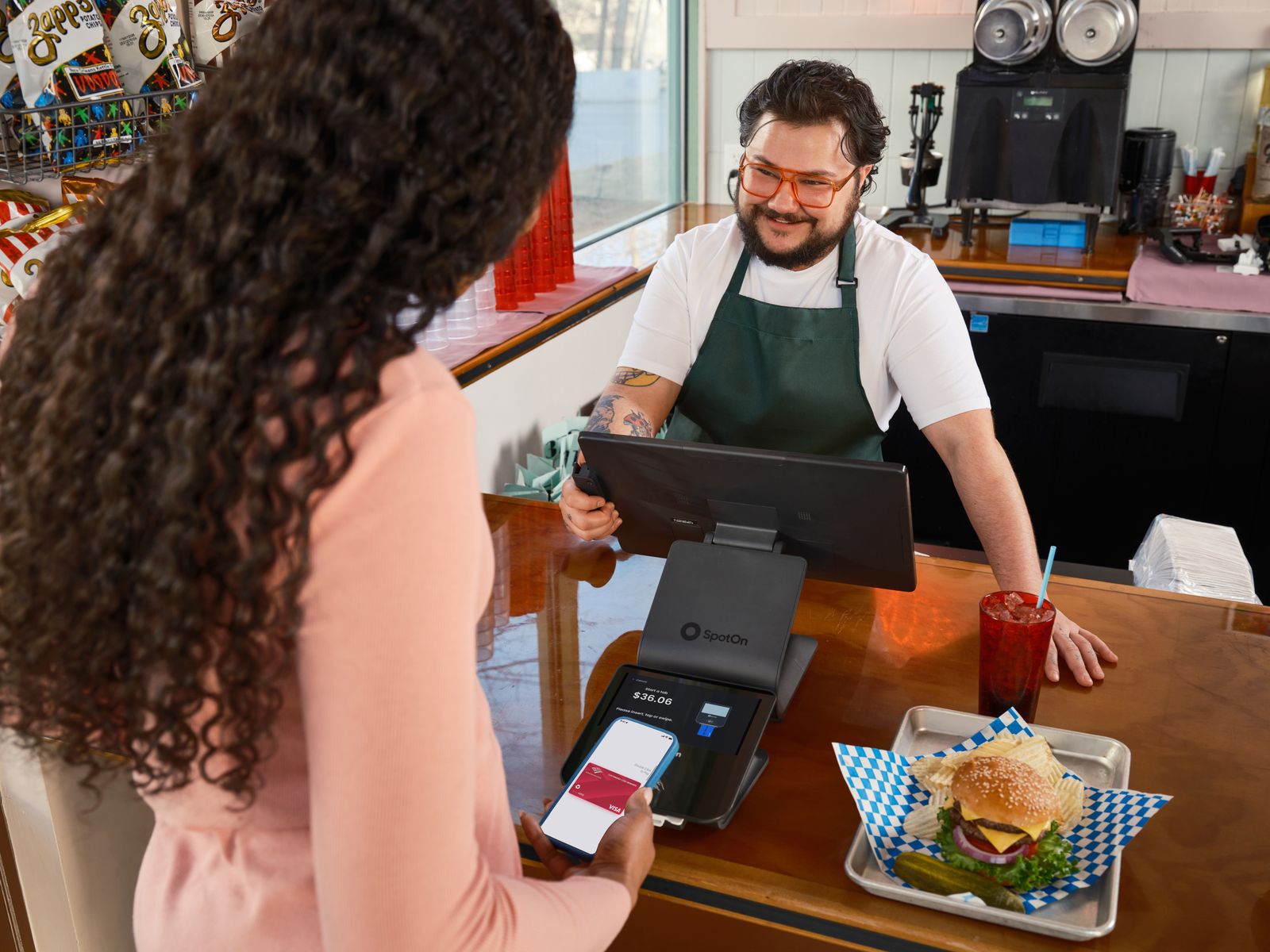
Foreign-card compatibility by situation
| Situation | Foreign card? | Practical visitor rule |
|---|---|---|
| Department store / hotel / mainstream retail | Usually yes | Visa/Mastercard are the safest baseline; AmEx, JCB and UnionPay are also common but acceptance varies by merchant. |
| Restaurant / café | Usually yes | Keep a physical card even if you prefer a phone wallet. |
| Taxi card reader | Generally supported for foreign-issued cards | Still keep a backup in case of terminal/network failure. |
| KTX / SRT / AREX ticket machine or counter | Foreign cards supported in the current visitor transport guide | Use the official website/app/counter or supported machine rather than assuming every kiosk is identical. |
| Seoul single-journey ticket / short-term Climate Card at new Lines 1–8 machines | Yes, supported international cards | Seoul added 440 new machines at 273 stations in March 2026. |
| Physical T-money purchase / top-up | Do not rely on foreign cards | KTO's 2026 transport guide says foreign-issued cards are not accepted for ordinary T-money purchase/top-up; keep KRW cash. |
| Tap foreign bank card directly at Seoul subway gate | Not the general 2026 system | Use T-money/Climate Card/mobile transport solution instead. |
Why transit is different from shopping
Korea's everyday retail card network and Seoul's transit fare system are not the same infrastructure. The Korea Tourism Organization's 2026 transportation guide explicitly distinguishes foreign-card ticket purchases from direct tap payment. It says foreign-issued cards can be used at supported ticket machines and counters for services such as AREX, KTX/SRT and the new Seoul subway single-use machines, but ordinary T-money purchase/top-up remains cash-based for visitors and foreign bank cards are not the normal direct-tap method at Seoul subway or AREX readers.
Seoul is building toward EMV open-loop transit, but the official city roadmap is staged through 2030. That means London-style “tap any bank card at every gate” is not yet the assumption a 2026 visitor should make.
For the full distinction between T-money, Climate Card and MobileTmoney, use the T-money / Climate Card / Foreign Cards guide.
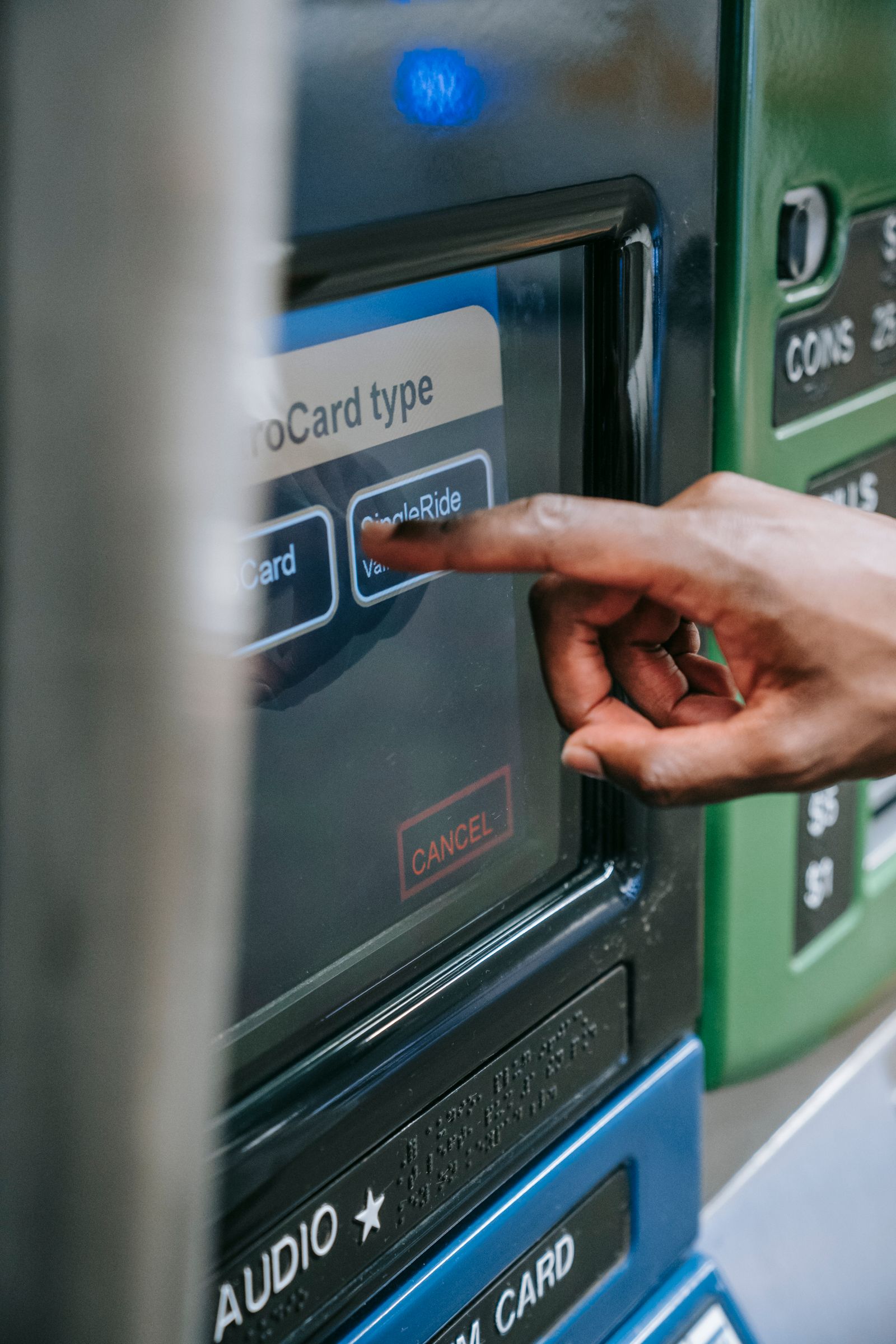
How much cash should you carry?
You do not need to fund the entire trip in cash. The goal is resilience. MikeyKorea's practical approach is to keep enough won for a transport-card reload, a small market purchase and one ordinary meal or taxi fallback. That amount will vary by group size, but the principle is more useful than a fixed number: cash is a backup tool, not the default spending method.
Cash becomes more important if you plan to use traditional markets extensively, recharge physical T-money frequently, or travel in smaller towns where payment terminals may be less predictable.
Mobile wallets: convenient, but do not make them your only method
Apple Pay, Samsung Wallet and other mobile wallets depend on several layers at once: your card issuer must support the wallet, the card network must be accepted, and the Korean merchant needs a compatible contactless/NFC terminal. A shop accepting the physical card does not guarantee the same terminal will accept a contactless wallet transaction.
For that reason, a phone wallet is best treated as a convenience layer. Carry the physical card behind it. This also protects you against a dead phone, roaming problem or wallet re-verification request.
Your card works—then suddenly it does not. What happened?
Possible causes include a merchant terminal that does not support that network, an issuer's overseas-security rule, a contactless-only failure, a temporary network problem or an online merchant that requires a Korean phone/identity workflow. Do not immediately conclude that “foreign cards do not work in Korea.” Test the physical chip card, another card or another payment channel.
Online reservations are a separate problem
Some Korean online services historically assumed a Korean mobile number or domestic card. Visitor-facing services are improving. For example, NAVER introduced passport verification in June 2026 so foreign users can access NAVER Booking, Order and payment services through NAVER Map without a Korean mobile number. Catchtable Global also exists specifically to remove Korean-phone and foreign-card barriers for restaurant reservations.
The four-layer backup stack
| Layer | Recommended role | Failure it covers |
|---|---|---|
| Primary international card | Most retail, hotels and restaurants | Avoids carrying large cash balances. |
| Second card on a different network/issuer | Backup | Issuer decline or merchant-network incompatibility. |
| Transport solution | T-money / Climate Card / mobile T-money as appropriate | Separates transit from retail-card assumptions. |
| Small KRW cash reserve | Top-ups, markets, emergency fallback | Terminal, network and small-merchant edge cases. |
Nationality does not determine acceptance—the card network and issuer do
A US-issued Visa, UK-issued Mastercard or Singapore-issued JCB is not accepted because of the passport nationality. Acceptance is determined by the card network, issuer settings, merchant agreement and terminal. When planning, think in terms of network + issuer + payment channel, not “Will a British card work?” or “Will an American card work?”
MikeyKorea payment rule
One primary card + one different backup + one deliberate transit method + a small cash reserve. This is more reliable than carrying many cards but no transport plan, or carrying only a phone wallet because contactless worked at home.
Continue planning from here
Use the next step that matches the decision you are making now: tax-refund guide, T-money guide, SIM/eSIM guide. These links are selected to continue the same travel task rather than send you back to a generic category page.
Sources
- VISITKOREA — Korean Currency & Credit Cards
- VISITKOREA — Shopping in Korea / payment networks
- KTO — 2026 International Visitors' Transportation & Payment Guide
- Seoul — international cards at new transit machines, Mar 2026
Last verified: 29 September 2026. Card and wallet support can change at merchant and issuer level; this guide separates documented system support from practical fallback advice.
Use the guide, then test your own situation
Use the planner to separate daily spending from shopping, then check the tax-refund route for larger eligible purchases.
Related Guides

Everyday Korean Etiquette: What Feels Different from the USA, UK & Japan
Learn the Korean habits that actually matter by comparing greetings, shoes, two-handed exchanges, public transport and everyday formality with familiar visitor norms.
Tipping in Korea vs USA, UK & Japan: What Visitors Should Do
Compare tipping in Korea with the USA, UK and Japan, then use a simple situation-by-situation guide for restaurants, taxis, hotels and tours.
Korea SIM vs eSIM vs Wi-Fi: Best Choice by Phone, Number & Trip Style
Choose Korea connectivity by the thing that actually matters: device compatibility, Korean 010-number needs, voice/SMS, data use, hotspot sharing, group size and trip length.