Korean Food for First-Time Visitors: Tourist Favourites vs Everyday Korean Picks
Compare the Korean dishes global consumers choose most often with the foods that function as everyday Korean meals, then pick a first dish by spice, format and confidence.
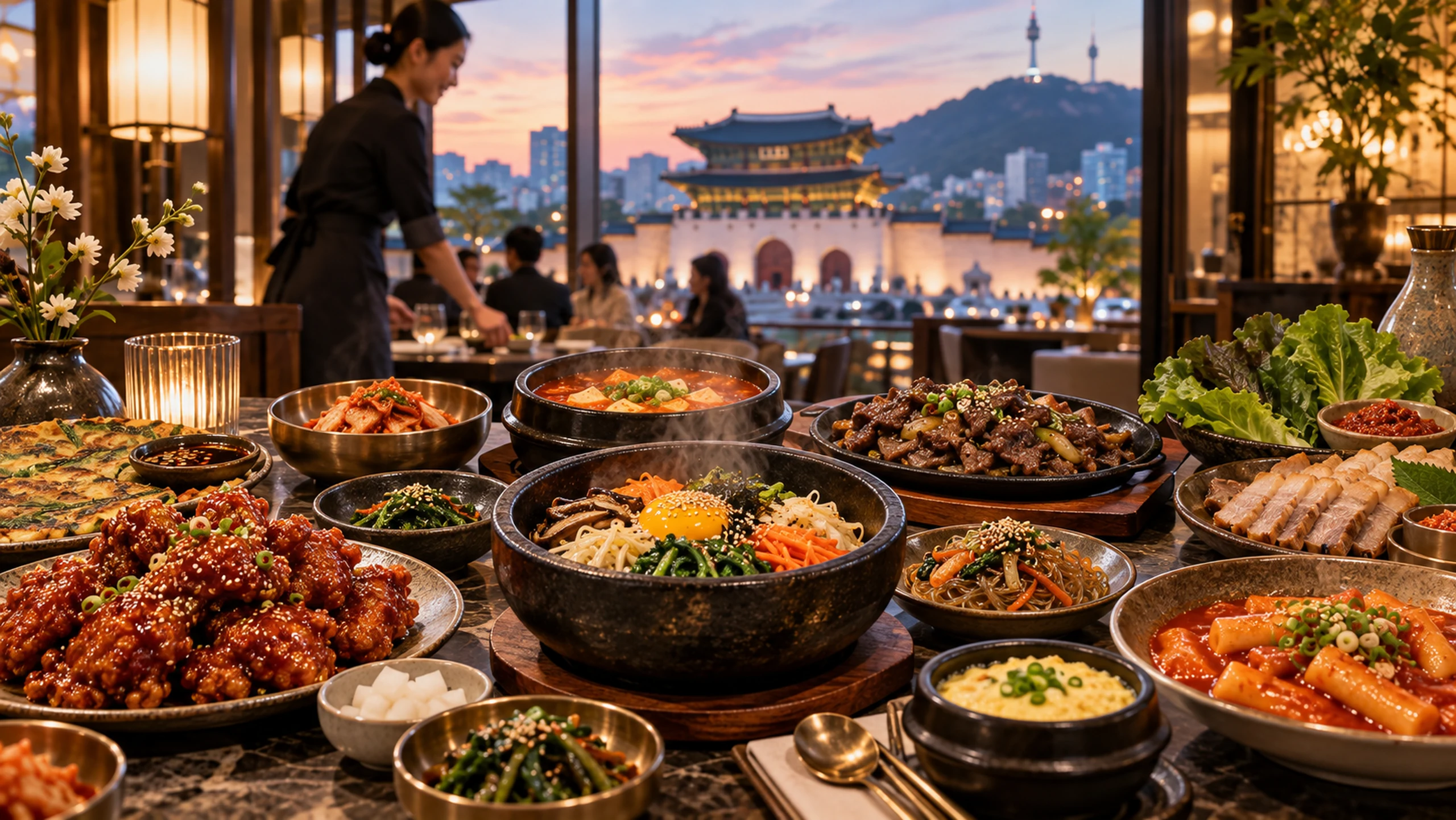
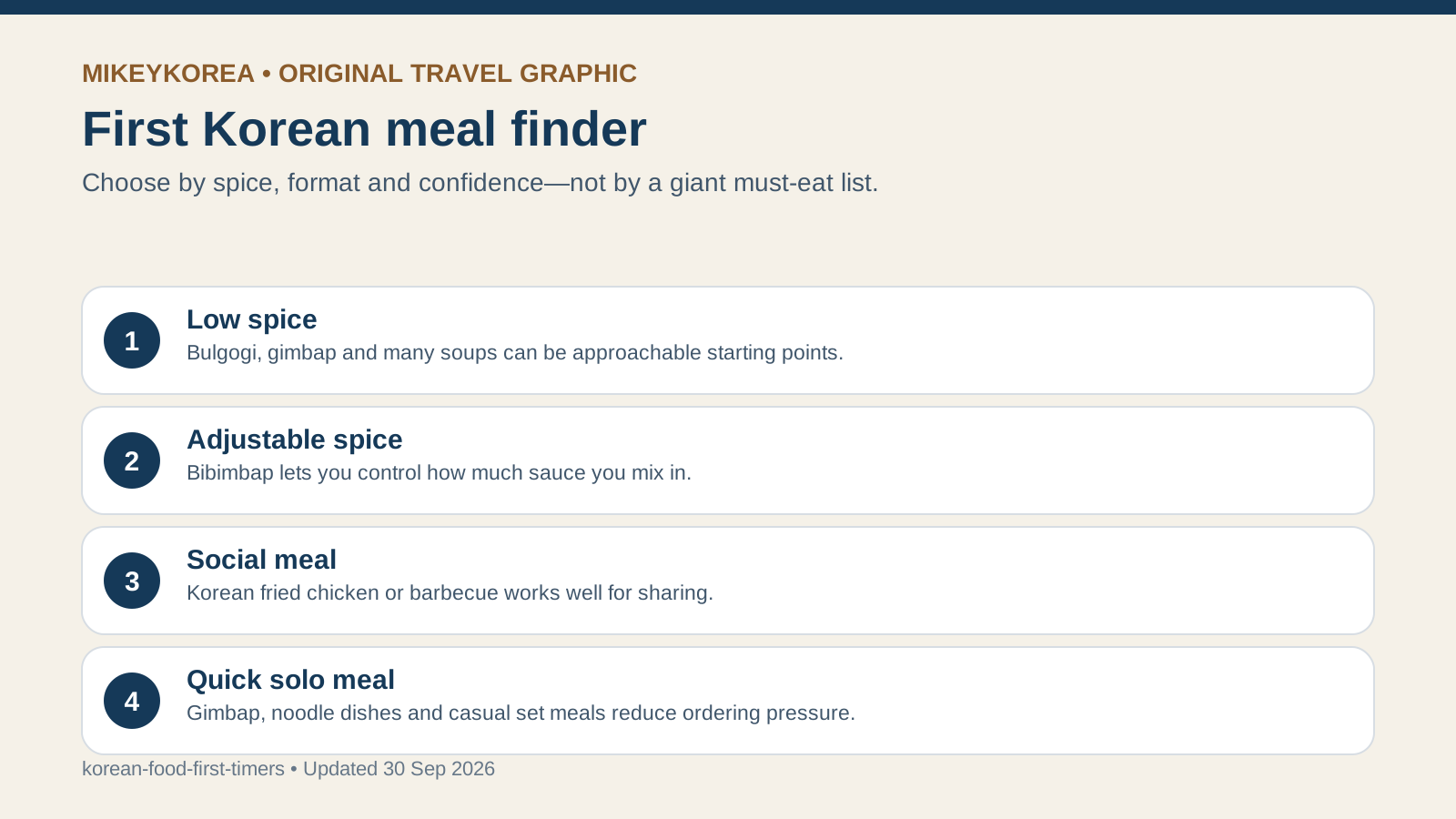
The foods that represent Korea abroad are not exactly the same as the foods that explain everyday eating in Korea. Global consumers disproportionately meet Korean fried chicken, kimchi, bibimbap, ramen and bulgogi. A Korean office worker deciding lunch, meanwhile, may also be choosing from kimchi-jjigae, gimbap, gukbap, naengmyeon, kalguksu or a simple barbecue meal. Both pictures are true; they answer different questions.
This guide uses the 2025 Korean Food Promotion Institute overseas consumer survey for the global-consumer ranking. For the Korean side, there is no perfectly comparable national “favourite dish” survey covering the same menu list, so MikeyKorea uses an explicitly labelled Everyday Korea Relevance score rather than inventing percentages.
What global consumers actually eat most often
| Global rank | Dish | Ate in the past year | MikeyKorea everyday-Korea relevance | Good first meal? |
|---|---|---|---|---|
| 1 | Korean fried chicken | 28.3% | 4/5 | Excellent if you want familiar format, social meal |
| 2 | Kimchi | 28.0% | 5/5 | Essential side dish, not usually a meal by itself |
| 3 | Bibimbap | 19.9% | 4/5 | Excellent: adjustable spice, individual bowl |
| 4 | Ramen / ramyeon | 16.6% | 5/5 | Easy, inexpensive, often spicy |
| 5 | Bulgogi | 14.0% | 4/5 | Very approachable, usually low spice |
| 6 | Mandu | 13.3% | 4/5 | Easy sharing or snack option |
| 7 | Kimchi fried rice | 12.5% | 4/5 | Familiar format with Korean flavour |
| 8 | Tteokbokki | 12.1% | 4/5 | Iconic street food; texture and spice can surprise |
| 9 | Gimbap | 10.7% | 5/5 | One of the easiest everyday meals to try |
| 10 | Grilled samgyeopsal | 9.8% | 5/5 | Great social meal; less convenient for solo diners |
Data note: the percentages are from the 2025 overseas Hansik consumer survey. “Everyday Korea relevance” is a MikeyKorea editorial score based on ordinary availability and meal role in Korea, not a domestic preference survey.
The tourist hit list misses some of Korea’s most useful everyday meals
If you only follow international popularity, you can leave Korea thinking the cuisine is fried chicken, barbecue, bibimbap and tteokbokki. Add a few ordinary meal formats and the picture becomes much richer:
- Gimbap: portable, cheap, widely available and one of the easiest solo meals.
- Kimchi-jjigae: a deeply everyday stew format that shows how rice, soup and banchan work together.
- Gukbap: soup and rice built for speed, warmth and solo eating.
- Kalguksu: knife-cut noodles; an easy non-barbecue route into comfort food.
- Naengmyeon: cold noodles that reveal a very different side of Korean texture and seasoning.
Korea’s public food-price dashboards track staples such as gimbap, kimchi-jjigae, naengmyeon, bibimbap and samgyeopsal as benchmark eating-out items. That does not make them a popularity poll, but it is a useful signal that these foods belong to ordinary domestic restaurant life rather than tourism-only lists.
Choose your first Korean meal by format, not fame
| If you want… | Try | Why |
|---|---|---|
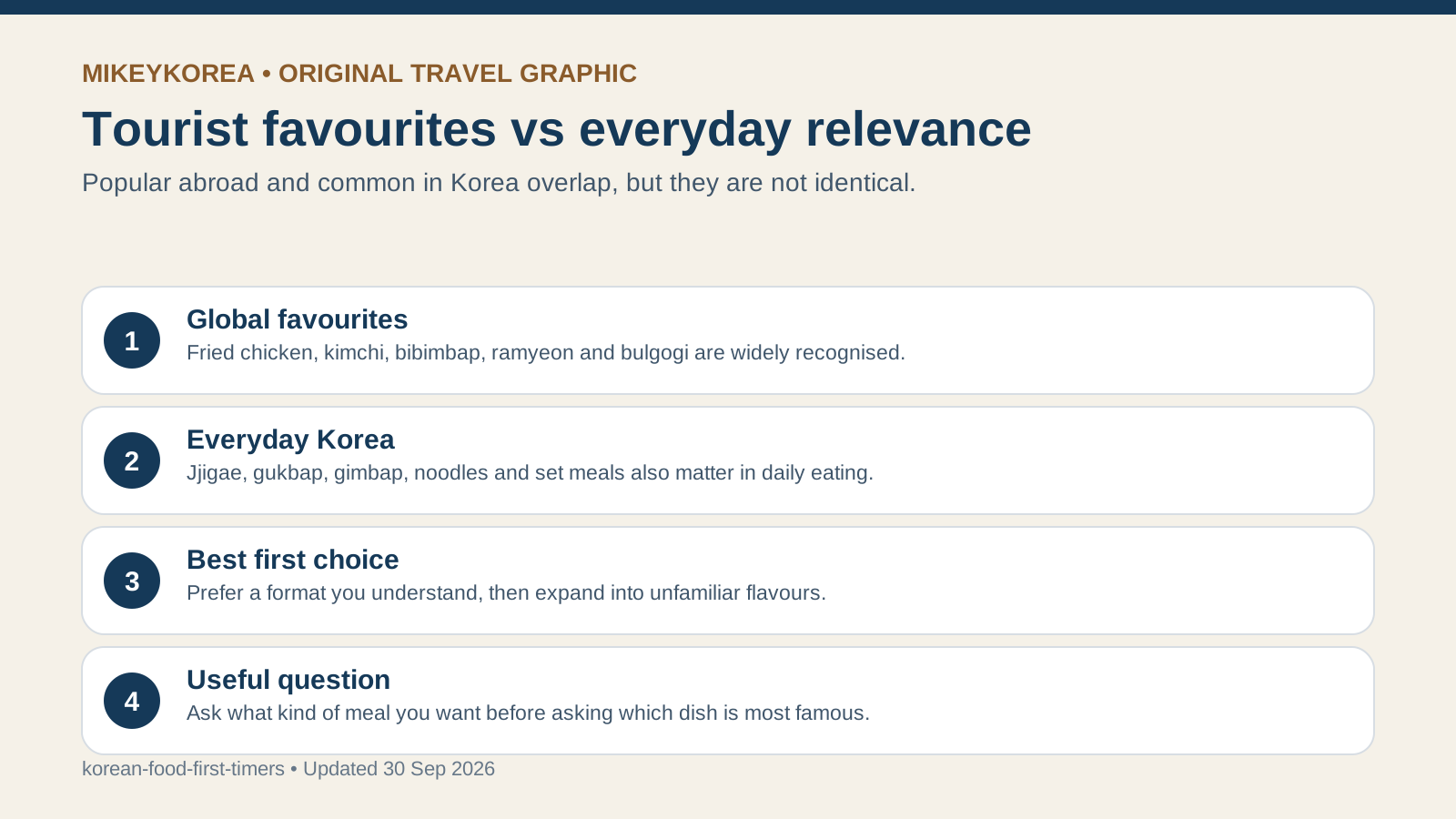
| Lowest culture shock | Bulgogi, fried chicken, mandu | Familiar textures and clear main-dish format |
| Easy solo meal | Bibimbap, gimbap, gukbap, kalguksu | Designed or easily ordered as one-person meals |
| Classic shared Korean meal | Samgyeopsal or other barbecue | Grill + wraps + banchan makes the table itself part of the experience |
| Street-food energy | Tteokbokki + eomuk + gimbap | Fast, inexpensive, strongly Korean snack-meal rhythm |
| Understand everyday banchan | Kimchi-jjigae or a set meal | Rice, soup and side dishes show the ordinary meal structure |
| Control spice | Bibimbap with gochujang added gradually, bulgogi, mandu | You can adjust heat more easily |
What “foreign favourite” really means
The 2025 survey asked consumers outside Korea about foods they had eaten and preferred. Korean-style fried chicken led both frequency and preference measures, while kimchi and bibimbap remained highly visible. This tells us what travels well internationally; it does not tell us what every Korean eats most often.
That distinction is useful. A first-time visitor can start with the globally proven dishes, then use Korea itself to discover the meal formats that export less easily: soups, set meals, noodle shops, solo gimbap counters and neighbourhood barbecue.
Tourist favourite vs local everyday: read the gap, not just the ranking
Some foods score high on both sides. Gimbap, ramyeon and samgyeopsal are familiar parts of Korean daily eating and also accessible to visitors. Others are more tourism-visible than their everyday role would suggest: bibimbap is an excellent first meal and a global symbol of Korean food, but many Koreans are just as likely to choose a soup, noodles or a quick rice meal on an ordinary weekday.
This is exactly why MikeyKorea separates the overseas survey from the local-relevance score. A visitor ranking answers “what has travelled well internationally?” The local score asks “does this dish help you understand how people actually eat around you in Korea?”
Dietary needs change the ranking
“Vegetable-looking” does not automatically mean vegetarian in Korea: broths, sauces and kimchi can include fish sauce, anchovy stock or meat ingredients. Halal and allergy-sensitive travellers should treat a popularity list as inspiration, not as an ingredients guarantee. If dietary restrictions are important, choose restaurants that can confirm ingredients rather than relying on the dish name alone.
For low-spice eaters, bulgogi, mandu, gimbap, many kalguksu styles and plain grilled meats can be easier starting points. For texture-sensitive visitors, tteokbokki and some cold noodles may be more challenging than their online popularity suggests.
Three ways to build a more Korean first-day food experience
- Global favourite + local staple: fried chicken at night, but gimbap or gukbap earlier in the day.
- Famous dish + ordinary format: bibimbap for lunch, then a neighbourhood jjigae meal with rice and banchan.
- Shared meal + solo meal: barbecue with companions, then experience how easy a one-person noodle or gimbap shop can be.
One-day food progression for a first-time visitor
- Breakfast: gimbap or a simple soup-and-rice meal.
- Lunch: bibimbap or kalguksu—easy to order and individually portioned.
- Snack: tteokbokki and eomuk if spice and chewy texture sound appealing.
- Dinner: Korean barbecue or bulgogi with banchan to experience the shared-table format.
- Late evening: Korean fried chicken if you still have room; it is a global favourite for a reason.
Continue planning from here
Use the next step that matches the decision you are making now: ordering food guide, dining etiquette guide, convenience-store food guide. These links are selected to continue the same travel task rather than send you back to a generic category page.
Sources
- Korean Food Promotion Institute — 2025 Hansik Overseas Consumer Survey
- VISITKOREA — About Korean Food
- aT Food Information Statistics System — restaurant menu benchmarks
Checked: 27 September 2026. Overseas survey percentages and MikeyKorea editorial scores are deliberately kept separate.
Use the guide, then test your own situation
Set a realistic daily food allowance in the trip planner and see how much room remains for cafés, markets and special meals.
Related Guides
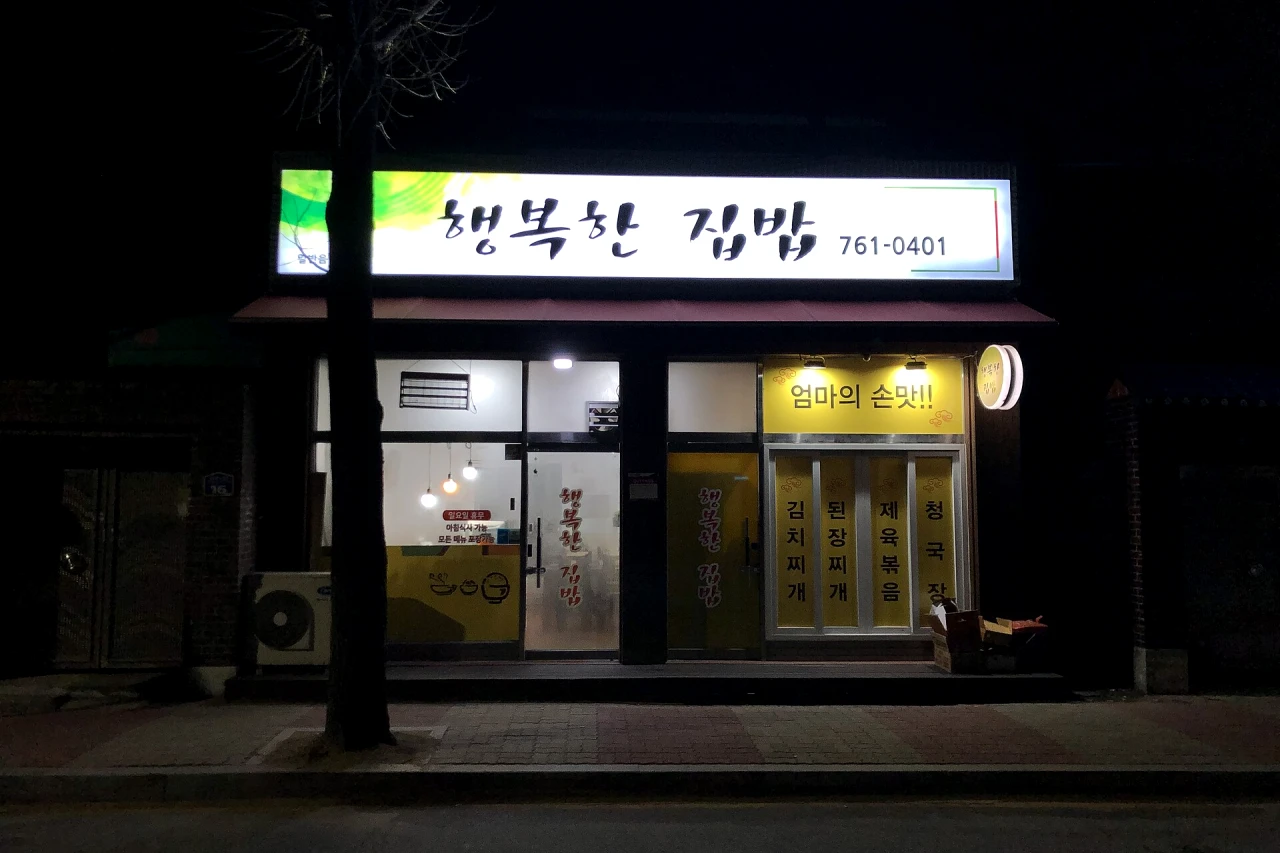
How to Order Food in Korea Without Stress: Kiosks, Table Tablets & Real Restaurant Flow
A first-timer’s practical ordering workflow for Korea: how to recognise kiosks, table tablets and staff ordering; what happens at barbecue restaurants; how solo orders, shared dishes, refills, allergies and payment actually work.
Korean Convenience Store Food: Build a Better Meal, Not Just a Snack Haul
Use CU, GS25, 7-Eleven and other Korean convenience stores intelligently: build breakfast, lunch, late-night and low-effort meals, understand microwave/ramyeon stations, compare tourist hits with everyday choices and avoid random overspending.
Korean Dining Etiquette vs USA, UK & Japan: A Visitor’s Guide
Compare Korean restaurant habits with familiar US, UK and Japanese expectations, from banchan and call buttons to shared dishes, payment and tipping.